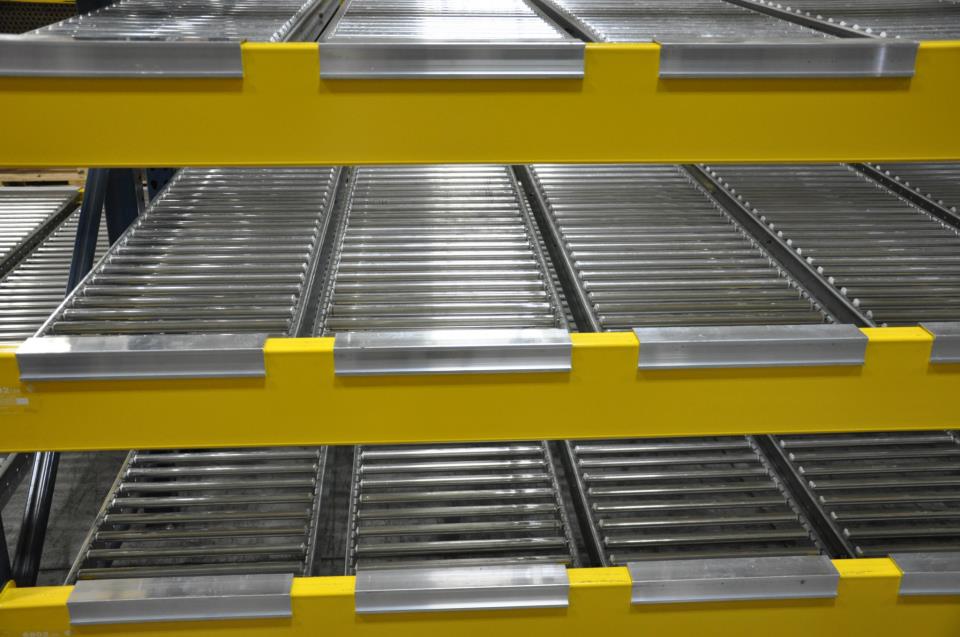
Carton Flow Rack in Philadelphia
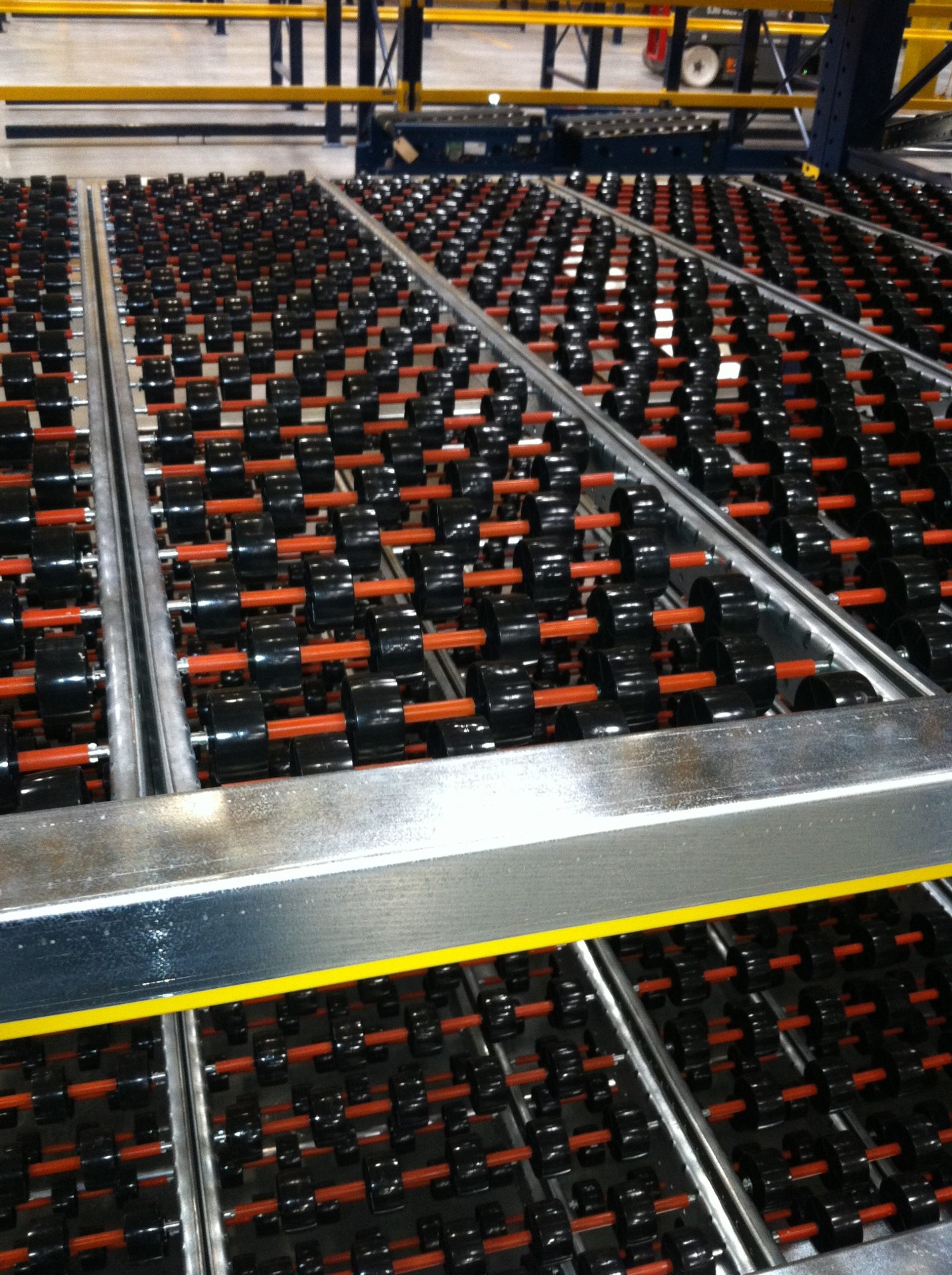
Carton flow rack in Philadelphia brings active case inventory to a defined front picking face while replenishment takes place behind it. Cartons or suitable totes advance on inclined roller lanes after each removal. That arrangement supports FIFO handling when employees consistently load from the rear, keeping newer arrivals behind stock already waiting to be picked.
For a city distribution building, the useful question is not how much depth fits on paper. It is whether the resulting pick module leaves room for receiving, replenishment carts, packing, and people passing one another. A compact group of well-chosen lanes can improve picking speed more meaningfully than a larger arrangement filled with products ordered only occasionally.
Why carton flow rack should follow the order profile
We start with order lines and package behavior rather than assuming every SKU belongs in gravity-fed storage. Frequent picks may warrant adjacent lanes or several front positions, while irregular cartons may belong elsewhere. Case flow rack earns its space when it reduces repeated walking and keeps replenishment from interrupting the same employee's picking sequence.
Our Philadelphia operation is a division of Warehouse Equipment & Supplies Co., supplying and installing since 1997. We connect the equipment recommendation to practical decisions such as carton opening space, location identification, and the distance between the last pick and the packing bench.
Different Philadelphia districts call for different pick layouts
South and Southwest Philadelphia operations linked to I-95, I-76, PhilaPort's Packer Avenue facilities, and the airport may need a clear route from inbound cases to active picking. Tioga and Navy Yard supply operations present other receiving patterns. In Northeast Philadelphia manufacturing buildings, older low-clear spaces and tight columns make short, carefully positioned modules preferable to assuming an uninterrupted rack run.
Philadelphia carton flow rack scope and retrofit checks
Review Philadelphia warehouse layout considerations for the broader building-storage discussion and Roller-lane picking systems for equipment details. Existing pallet rack bays may offer a starting point, but frame identity, connection style, condition, supported load, and available beam spacing must be checked before selecting a retrofit.
If the operation also needs pallet-depth storage, compare FIFO storage for full pallets with the case-picking arrangement rather than treating both as interchangeable. For reserve products that do not need first-in, first-out access, Alternative reserve configurations introduces another storage sequence to evaluate.
A phased equipment plan can keep one picking zone available while another is prepared. Within that plan, experienced installation crews we schedule and manage assemble the specified system around the agreed operating boundaries. The carton flow racking scope should identify lane quantities, dividers, supporting components, and the access needed for replenishment.
How carton flow racking becomes a working pick module
The design needs to account for each handoff, not just the footprint occupied by the rollers.
Separate active demand from reserve
List the products picked repeatedly during a normal operating period. Determine how many cases belong in the active face and how much should remain in reserve, avoiding unnecessary depth for slow-moving items.
Fit the lane to the package
Evaluate carton bottoms, tote contact surfaces, loaded weights, and width variation. Select roller support and dividers that guide containers without pinching them. Test actual samples where packaging changes could affect movement.
Build the picking sequence
Arrange related products in the order employees encounter them. Check reach, removal clearance, and space for open cartons. A pick module should support the work method rather than force repeated turns or backtracking.
Plan rear loading separately
Show how replenishment reaches every lane without occupying the front aisle. Confirm that empty packaging has an exit route and that staff can identify the correct loading position before placing a new case.
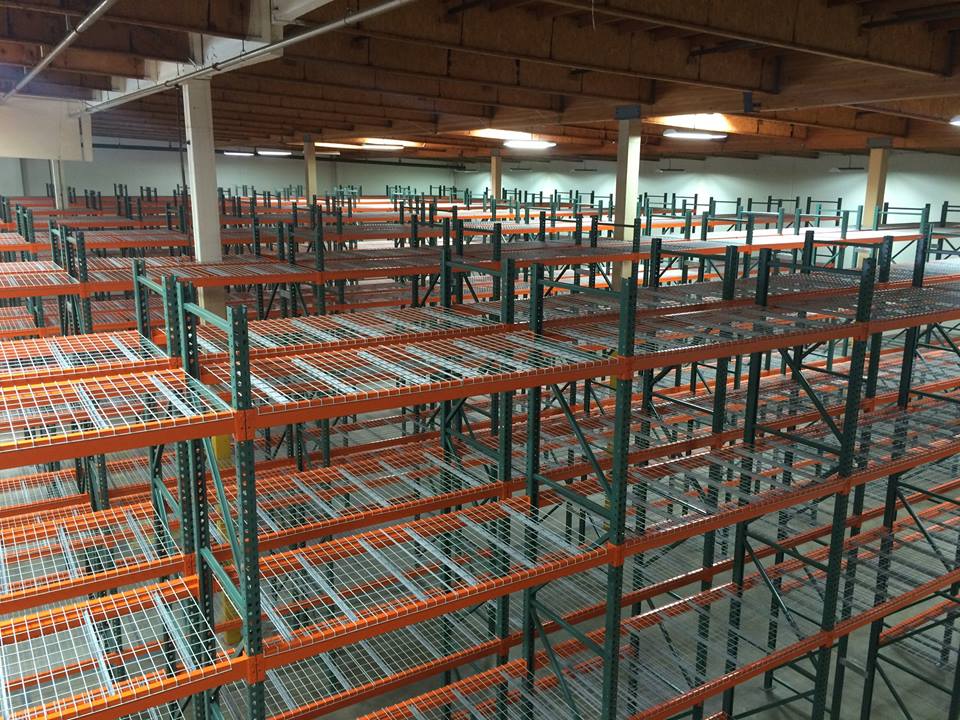
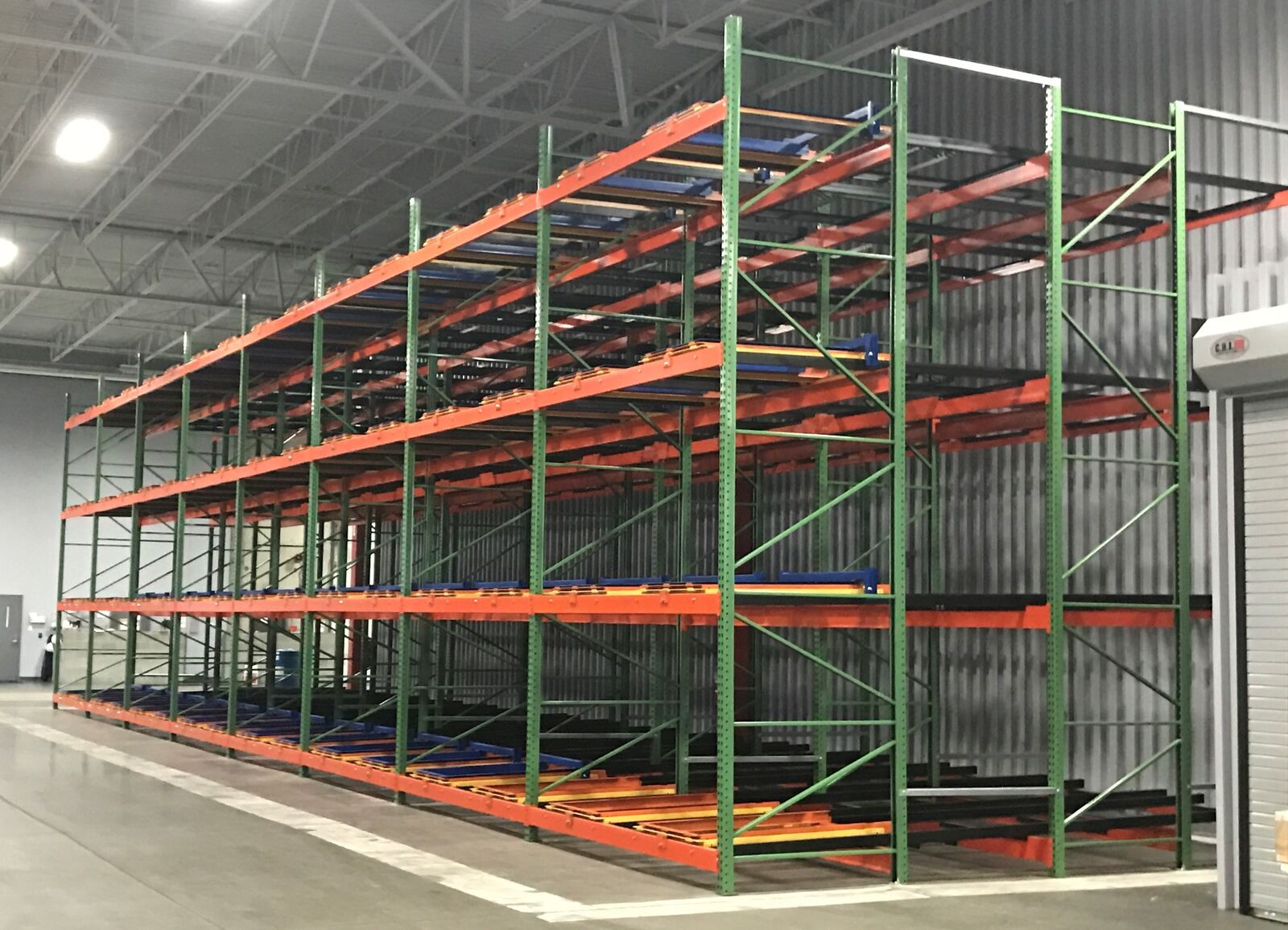
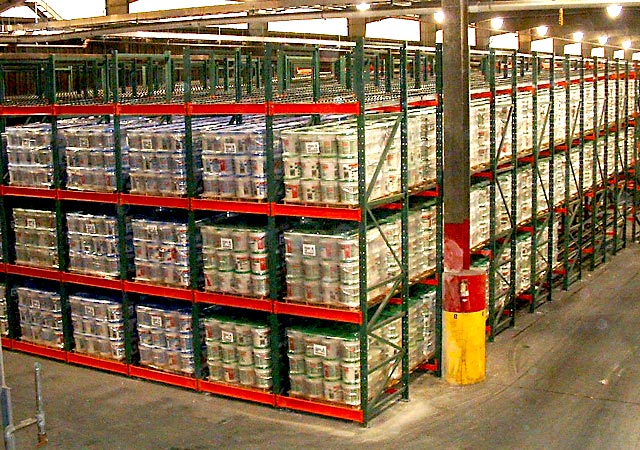
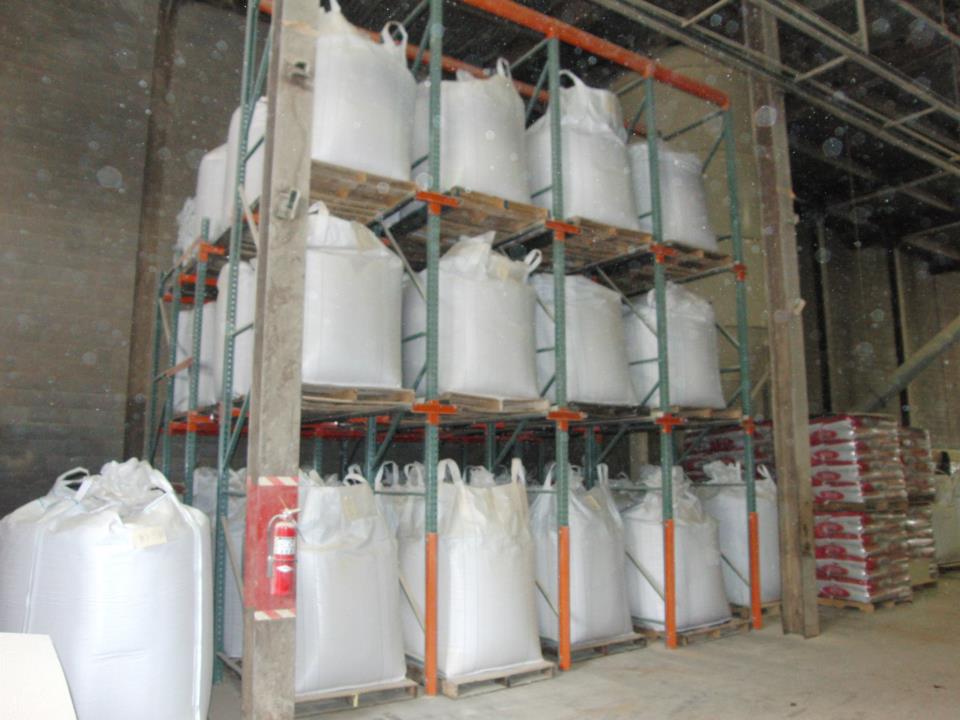
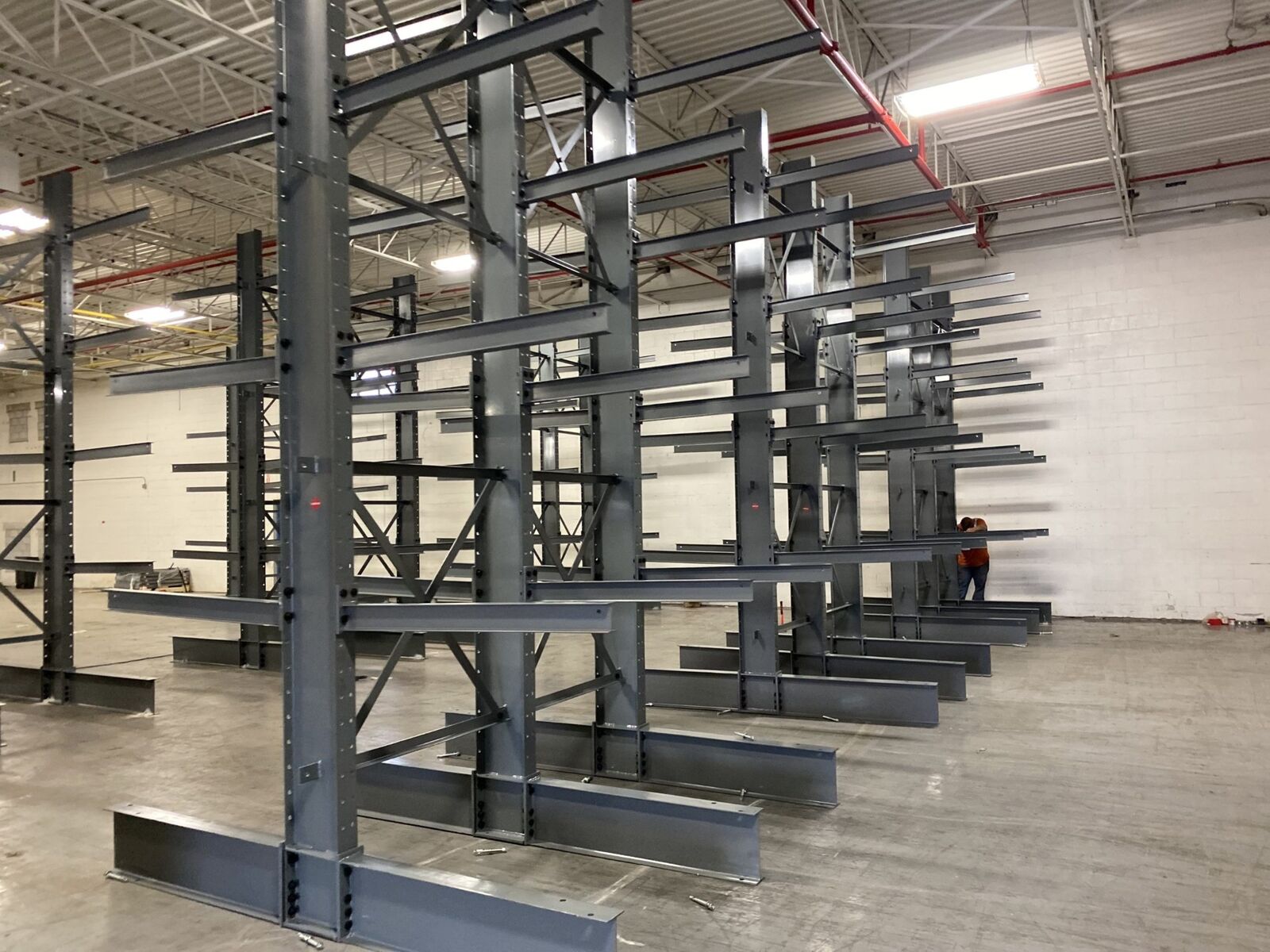
Warehouse Racking Examples
Start with the orders your staff actually picks
Send an SKU list, representative case sizes, and a sketch showing packing and receiving.
Philadelphia Pallet Rack
7201 Frankford Ave.
Unit #3151
Philadelphia, PA 19135
(215) 445-1559Monday - Friday: 8:00 AM - 6:00 PM
Philadelphia picking-layout decisions
Other Rack Types We Supply in Philadelphia
Pallet Rack
Every pallet reachable, every time. The baseline we size everything else against.
View detailsPushback Rack
Two to six pallets deep from one aisle, without giving up much reach.
View detailsPallet Flow Rack
Load one side, pick the other, and let gravity enforce first in, first out.
View detailsDrive-In Rack
Fewer access aisles. Forklifts enter storage lanes built for bulk pallets of the same item.
View detailsCantilever Rack
Arms with nothing in front of them, built for lumber, pipe, and anything a pallet can't hold.
View detailsWarehouse Relocation
Teardown, label, coordinate transport and reinstall your storage systems around a planned building move.
View detailsNearby Areas We Also Serve
Our city planning conversation accounts for waterfront receiving and interior industrial spaces alike.
Where We Work
Located in Philadelphia, we serve the entire Greater Philadelphia region with industrial pallet racks and warehouse storage solutions.
Philadelphia Pallet Rack
Address
7201 Frankford Ave.
Unit #3151
Philadelphia, PA 19135
Phone
(215) 445-1559Business Hours
Monday - Friday: 8:00 AM - 6:00 PM
Saturday: Closed
Sunday: Closed
Need Carton Flow Rack in Philadelphia?
Discuss your Philadelphia pick sequence at (215) 445-1559 before choosing lane depth.