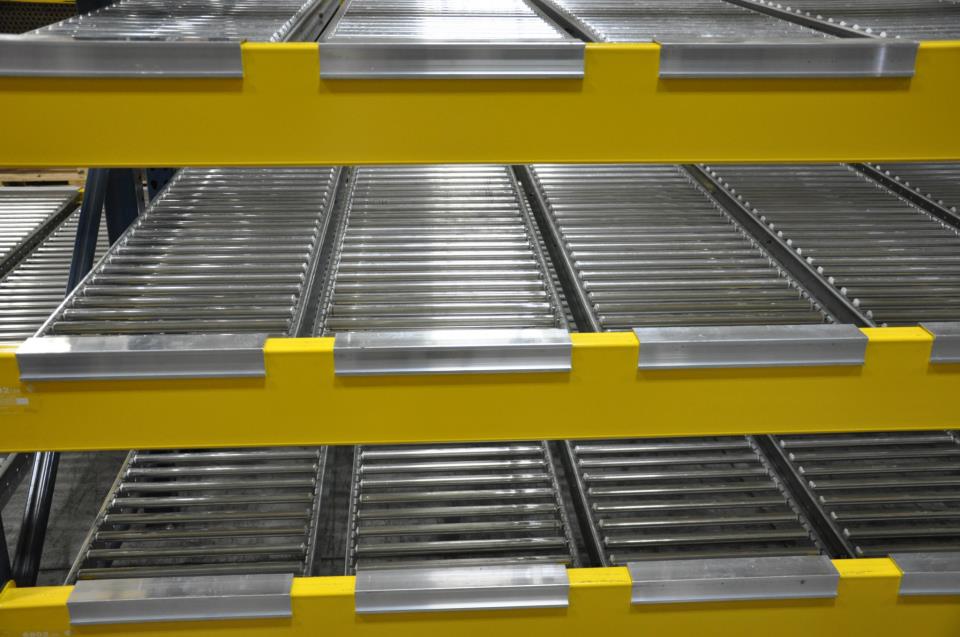
Carton Flow Rack in King of Prussia
Carton flow rack in King of Prussia separates the activity of filling pick locations from the activity of selecting orders. Inclined roller lanes present cases or totes at the front while employees replenish from the rear. That arrangement is useful when a distribution operation needs a concentrated picking face without placing replenishment carts beside every order picker.
The buying question is not simply how many cartons fit. Carton flow racking must balance active SKU count, cases consumed between refills, package behavior, and the walking route through the pick module. A deeper lane can hold more inventory yet provide little benefit when the real constraint is too few accessible pick addresses.
Why Carton Flow Rack Needs a SKU-Level Plan
We distinguish fast case movers from occasional selections before assigning lane frontage. Repeated bending, reaching, and crossing between distant locations can outweigh the value of extra storage depth. Grouping related order lines may shorten travel, while heavier cases generally need positions that avoid unnecessary lifting.
As a division of Warehouse Equipment & Supplies Co., supplying and installing since 1997, we look beyond the roller bed to the replenishment chain. A lane plan should identify reserve locations, transfer points, and responsibility for refilling. Otherwise, a compact picking area can merely relocate the queue to its loading side.
Montgomery County Distribution Routes and Internal Flow
King of Prussia, Conshohocken, and Norristown sit within a connected Montgomery County distribution market served by I-76 and I-476. For pharmaceutical supply operations, inbound transportation access does not remove the need for internal separation. Released cases, held inventory, and outbound order assembly need distinct positions before they feed a common picking route.
Connecting Carton Flow Rack to Reserve Storage
Our King of Prussia warehouse planning information provides the local planning context, while Roller-lane system overview outlines case-level equipment. For a quote, identify the number of active SKUs, package dimensions, maximum loaded weights, intended picking method, and the replenishment window available during each shift.
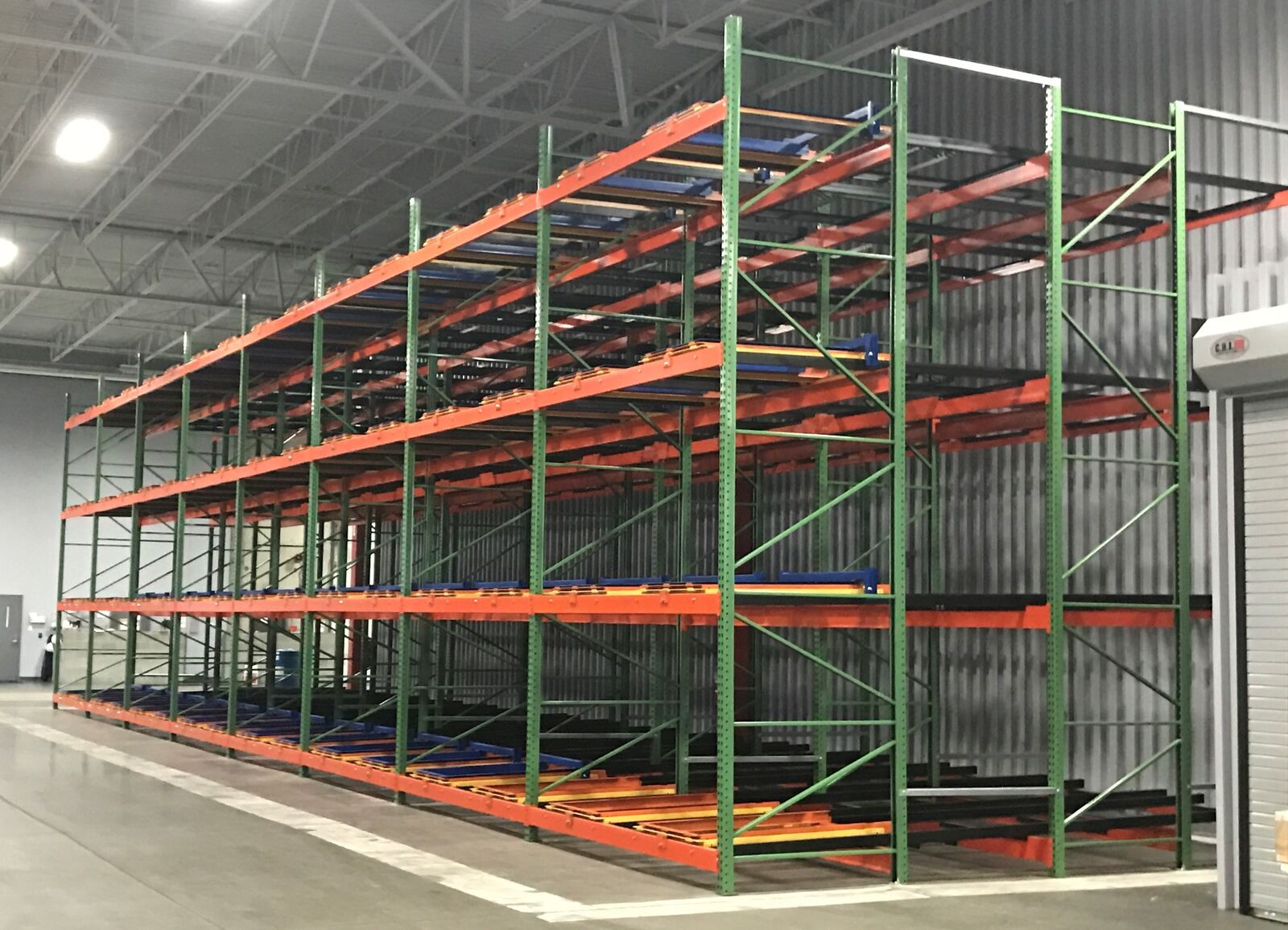
Consider Pallet replenishment by gravity when full pallets need to advance toward a withdrawal face. Compare Reserve-bay alternatives where reserve density takes priority and last-in, first-out handling fits the inventory. The case-picking layout should show how reserve stock reaches the rear lanes without crossing assembled orders.
Work can be divided into agreed areas, with experienced installation crews we schedule and manage handling the approved equipment arrangement. Representative case trials help confirm presentation at the pick face. We also review how lane identification and replenishment signals will support picking speed after startup.
How Carton Flow Racking Supports a Balanced Pick Module
Translate order patterns into lane requirements before choosing the number of bays or levels.
Map demand across the picking face
Review order-line frequency alongside case consumption. An item selected often in small quantities may need convenient frontage rather than substantial depth. Allocate neighboring addresses with congestion in mind, especially where several employees assemble orders simultaneously.
Specify support and guidance
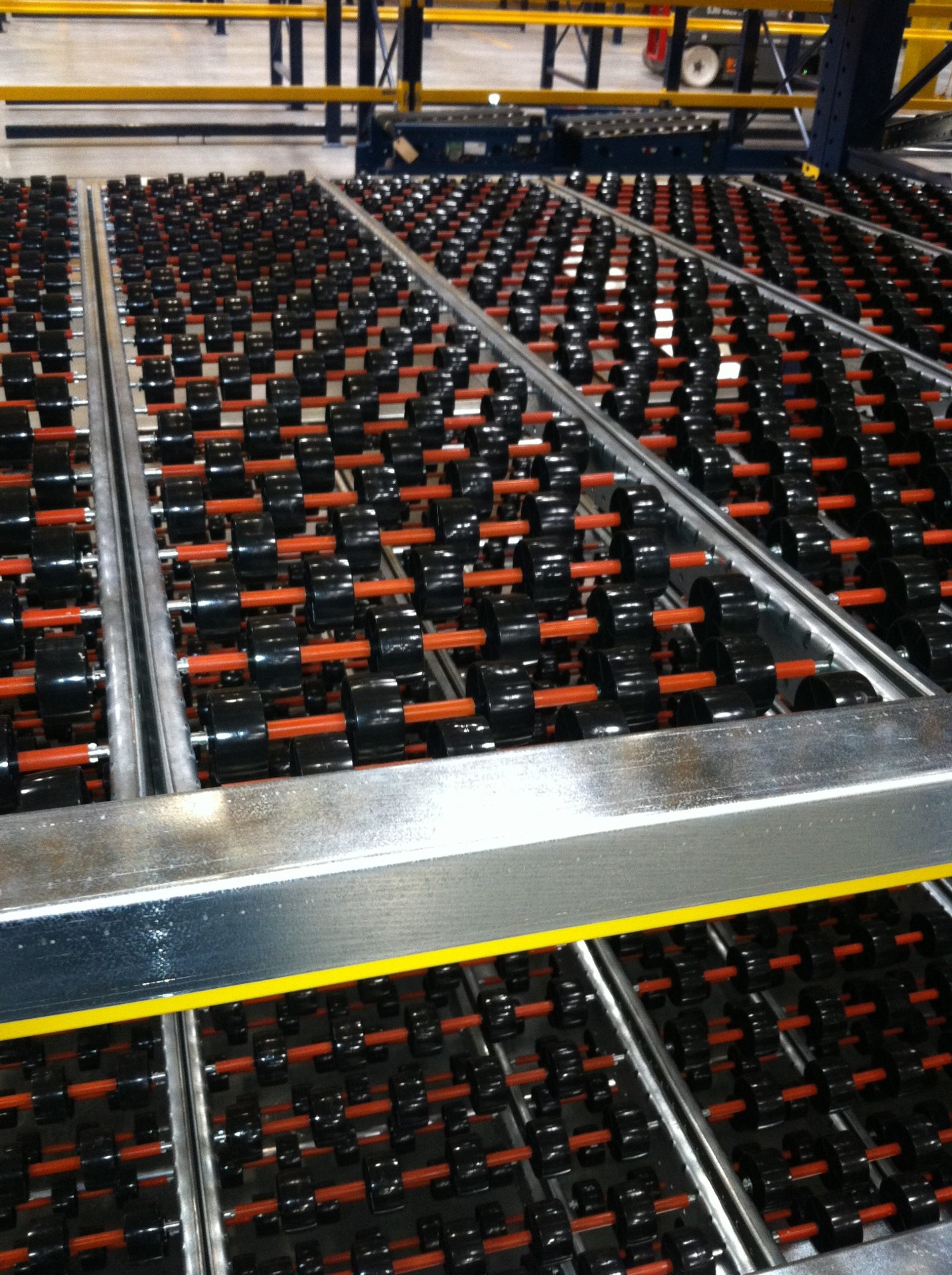
Case bottoms determine roller placement, while container width determines divider spacing. Allow operating clearance without leaving room for cartons to skew. Test totes with molded runners in their intended orientation, including the lighter condition near the end of use.
Establish FIFO handling rules
Front picking and rear replenishment support FIFO within each lane when stock enters in sequence. Multiple lanes carrying the same SKU still need an address-selection rule. Lot tracking and expiration priorities remain inventory responsibilities rather than automatic functions of gravity.
Review retrofit loading
For existing pallet bays, verify component compatibility and the loads introduced by the proposed levels. Account for reserve pallets above the picking face where applicable. Confirm that beam positions allow suitable lane slope, hand access, and visibility of labels.
Warehouse Racking Examples
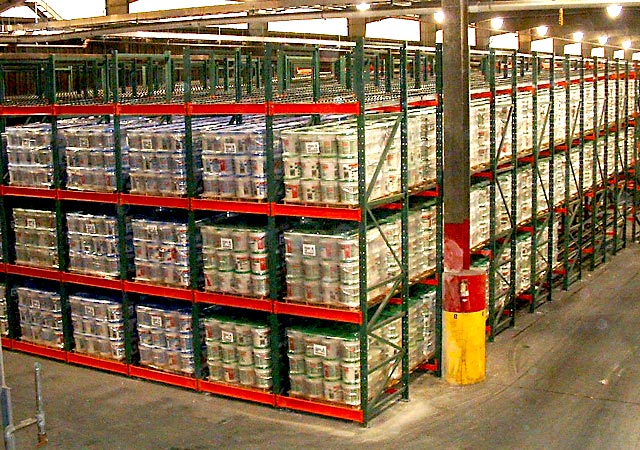
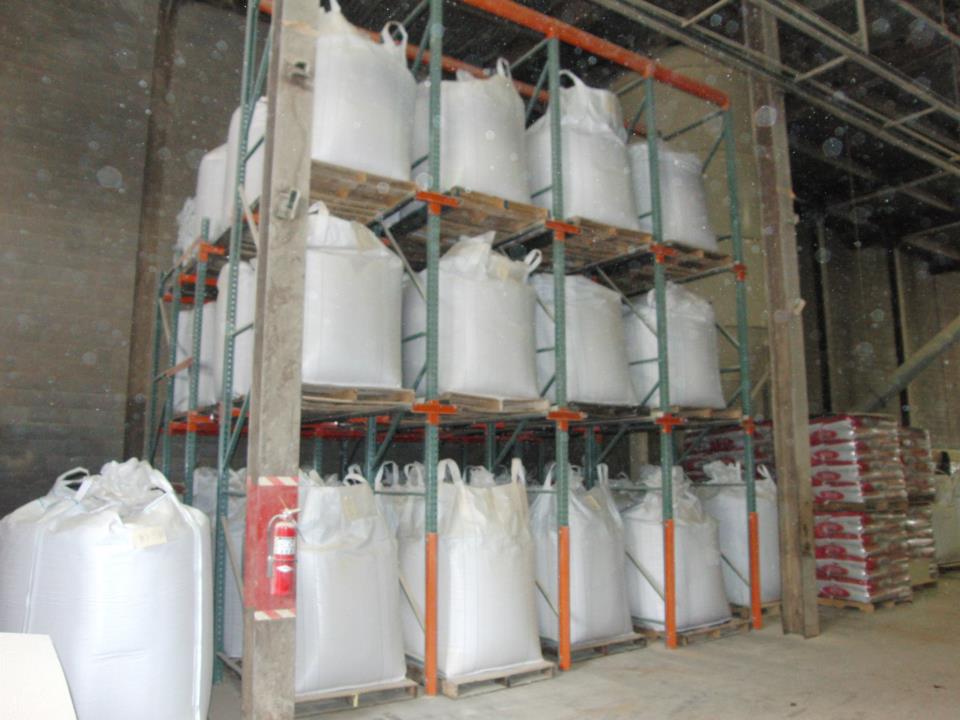
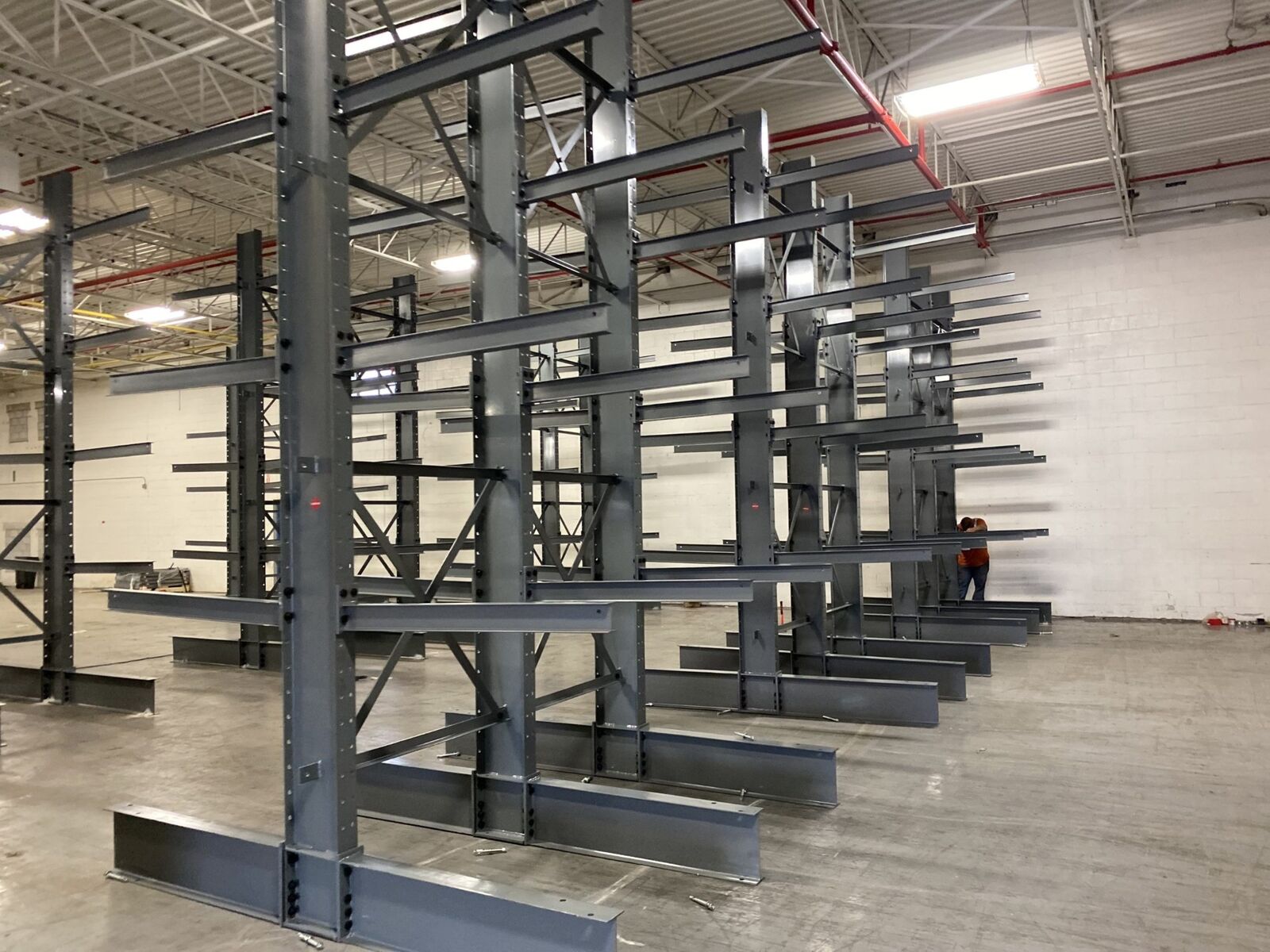
Price the Picking Face, Not Just the Bay
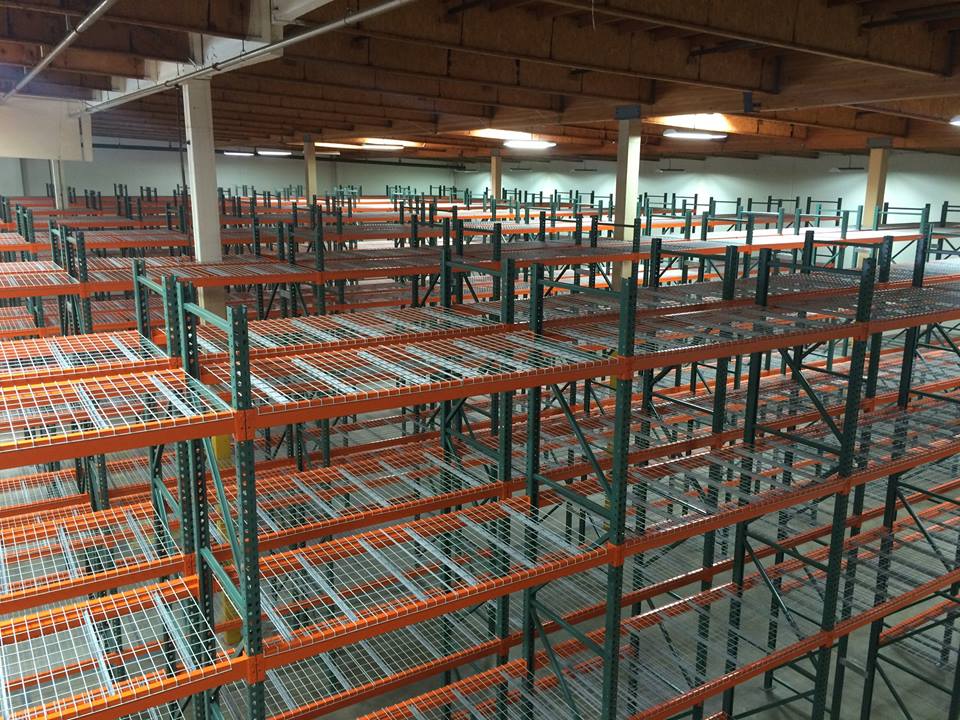
Share a SKU summary and bay photographs so the proposal can distinguish storage capacity from useful selection positions.
Philadelphia Pallet Rack
7201 Frankford Ave.
Unit #3151
Philadelphia, PA 19135
(215) 445-1559Monday - Friday: 8:00 AM - 6:00 PM
Questions About Busy Montgomery County Pick Areas
Other Rack Types We Supply in King of Prussia
Pallet Rack
Every pallet reachable, every time. The baseline we size everything else against.
View detailsPushback Rack
Two to six pallets deep from one aisle, without giving up much reach.
View detailsPallet Flow Rack
Load one side, pick the other, and let gravity enforce first in, first out.
View detailsDrive-In Rack
Fewer access aisles. Forklifts enter storage lanes built for bulk pallets of the same item.
View detailsCantilever Rack
Arms with nothing in front of them, built for lumber, pipe, and anything a pallet can't hold.
View detailsWarehouse Relocation
Teardown, label, coordinate transport and reinstall your storage systems around a planned building move.
View detailsNearby Areas We Also Serve
Layout discussions cover King of Prussia and neighboring Conshohocken and Norristown facilities with differing reserve-storage arrangements.
Where We Work
Located in Philadelphia, we serve the entire Greater Philadelphia region with industrial pallet racks and warehouse storage solutions.
Philadelphia Pallet Rack
Address
7201 Frankford Ave.
Unit #3151
Philadelphia, PA 19135
Phone
(215) 445-1559Business Hours
Monday - Friday: 8:00 AM - 6:00 PM
Saturday: Closed
Sunday: Closed
Need Carton Flow Rack in King of Prussia?
Discuss carton flow rack requirements at (215) 445-1559 before committing space to another picking row.