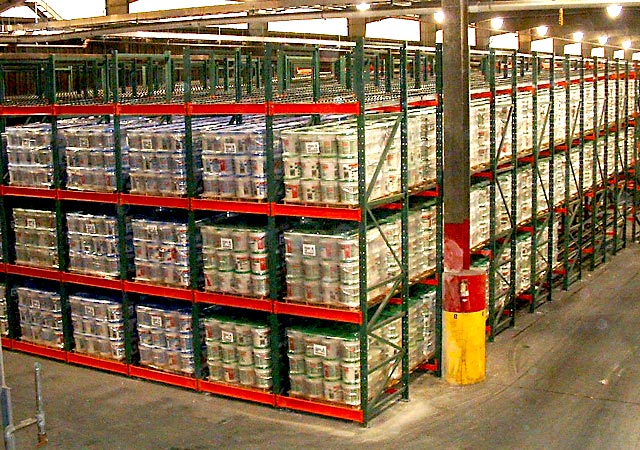
Pallet Flow Rack in Philadelphia
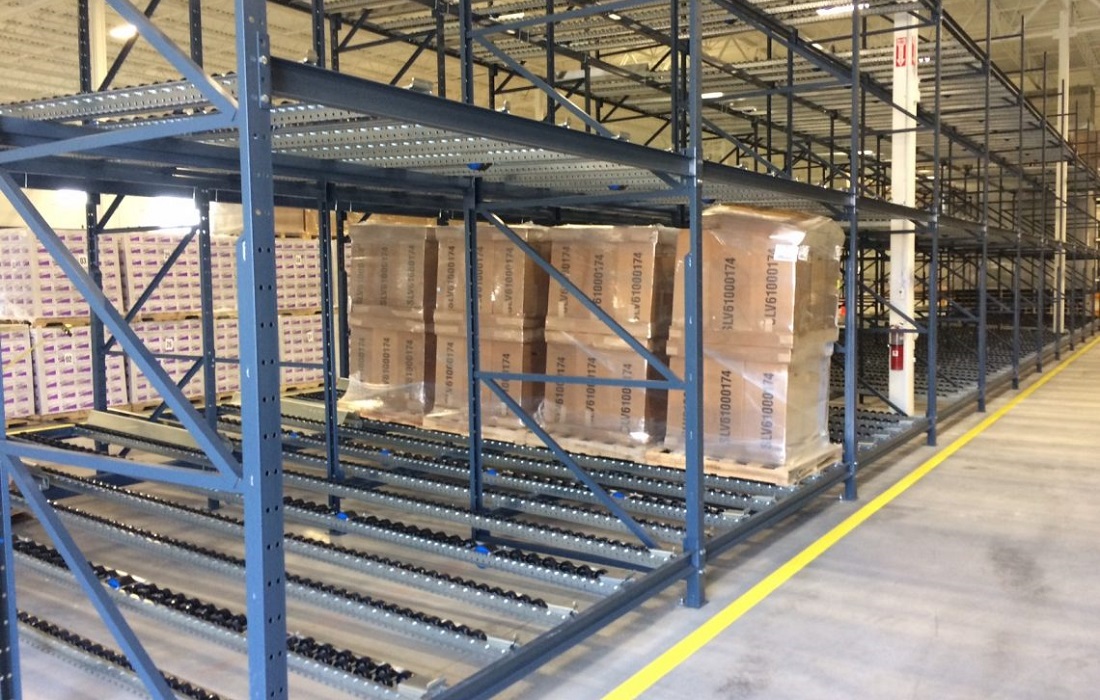
Pallet flow rack in Philadelphia gives food distributors a way to move older waterfront receipts toward shipping while replenishment continues behind the storage block. Gravity rollers carry pallets from a loading aisle to a separate picking face, supporting FIFO without making drivers relocate newer stock to reach an earlier batch.
The benefit depends on choosing the right inventory. Dated, high-volume SKUs with repeat pallet quantities are stronger candidates than a wide assortment of slow movers. We look at active dates, pallets per item and withdrawal frequency before recommending how much space each lane should occupy in an urban warehouse.
Philadelphia pallet flow rack design and assembly
Begin with Philadelphia storage planning to review the surrounding warehouse layout and pallet flow equipment to examine the full-pallet flow approach. Our proposal ties lane capacity to pallet data, FIFO requirements and measured aisle space, with the equipment scope explained alongside the proposed arrangement.
Use pushback system comparison as a comparison for undated reserve where one-sided access is more useful than chronological withdrawal. Review carton flow pick faces for urban fulfillment orders picked by the case, rather than expecting full-pallet roller lanes to provide the same small-unit picking arrangement.
We coordinate assembly through experienced installation crews we schedule and manage, planning component staging around the building's receiving and shipping routes. Installed flow components, representative pallet movement and configuration-specific load information are reviewed as part of a handoff focused on how the lanes will actually be replenished and picked.
How pallet flow racking presents the next load
The system must support the pallet, control its advance and leave operators room to withdraw it.
Identify a repeatable pallet base
Measure the footprint, bottom boards and loaded height, and record weight extremes. Check for damaged runners and loose wrapping underneath. Incoming port freight can arrive on different bases, so define pallet acceptance before planning to put every receipt onto the same rollers.
Choose depth from the stock profile
Count pallets by SKU and active lot, then compare those quantities with lane occupancy through a normal dispatch cycle. Set slope using the selected equipment and representative loads. Preserve separate loading and picking aisles, including turning clearance around columns and dock approaches.
Govern travel to the discharge face
Brakes or speed controllers moderate pallet movement along the rollers. Select controls for both lighter and heavier loads, with suitable end restraints and any required discharge separator. Controlled advancement matters when one pallet is withdrawn and the remaining queue starts moving again.
Confirm the complete handling routine
Test representative loads after assembly to check tracking, travel and picking clearance. Verify rear replenishment and front removal with the intended equipment. Review lane labels, date selection across lanes and the procedure for excluding an unsuitable pallet before normal receiving begins.
Why pallet flow rack belongs in the rotation discussion
Dense storage is not useful if it conceals the lot shipping needs next. A flow lane preserves arrival order when staff replenish from the designated rear face and remove pallets from the front. Date records and lane assignments remain necessary, particularly where the same SKU occupies several lanes with different receipt dates.
Since 1997, our operation has been supplying and installing warehouse equipment as a division of Warehouse Equipment & Supplies Co. We bring that storage perspective to roller selection, checking pallet construction and load variation before treating additional depth as an answer to a crowded building.
From port terminals to constrained city buildings
Food receipts associated with PhilaPort's Packer Avenue and Tioga areas need space for inspection and staging before they reach the loading aisle. In Northeast Philadelphia's older industrial buildings, column lines and tight dock approaches may favor shorter lanes. For distribution routes using I-95 and I-76, the discharge face should feed outbound staging without turning the replenishment route into a crossing point for shipping traffic.
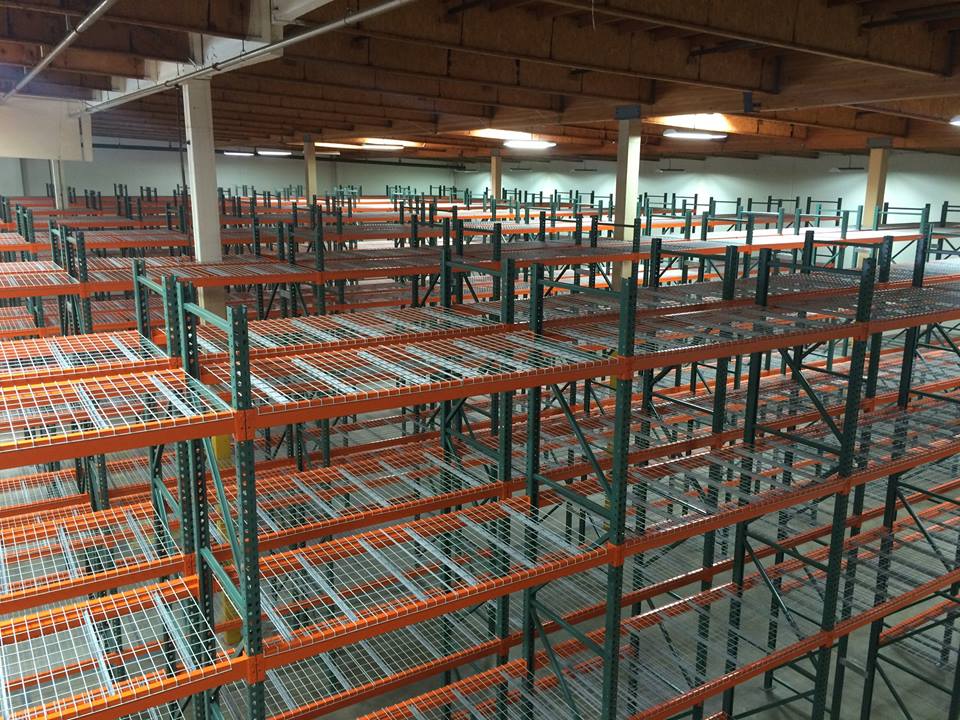
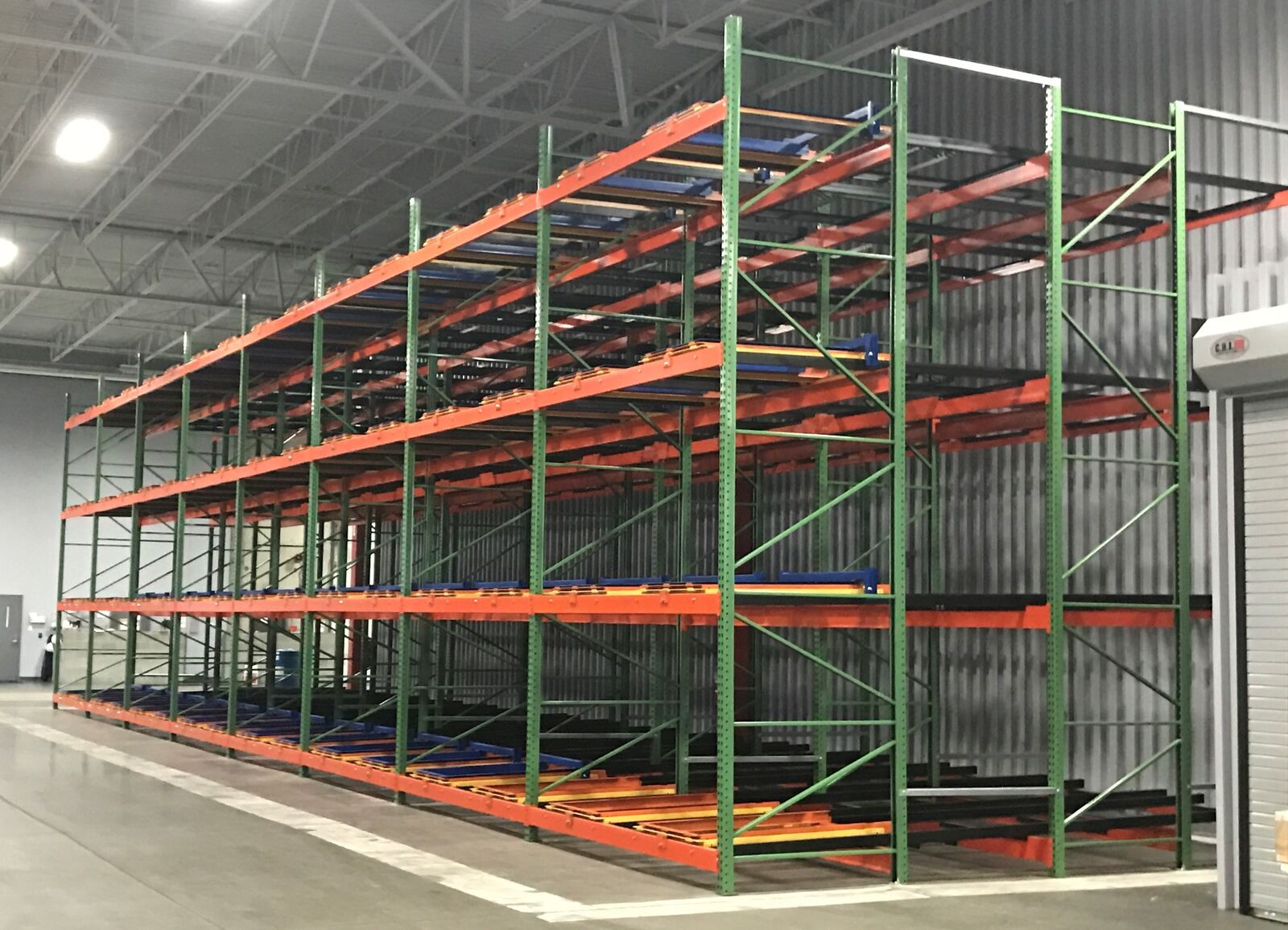
Warehouse Racking Examples
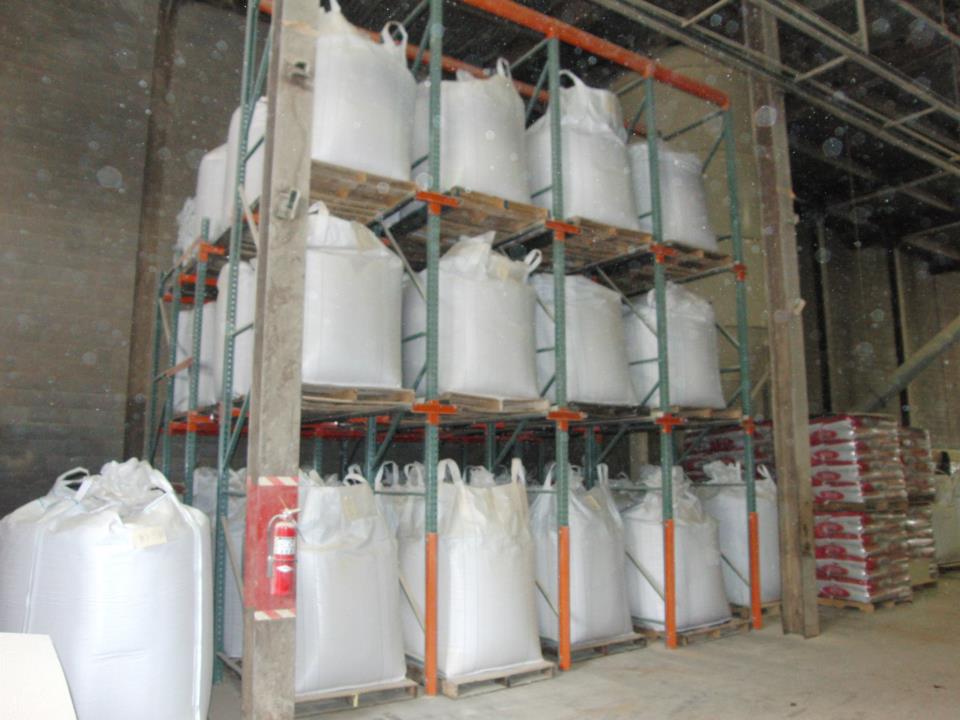
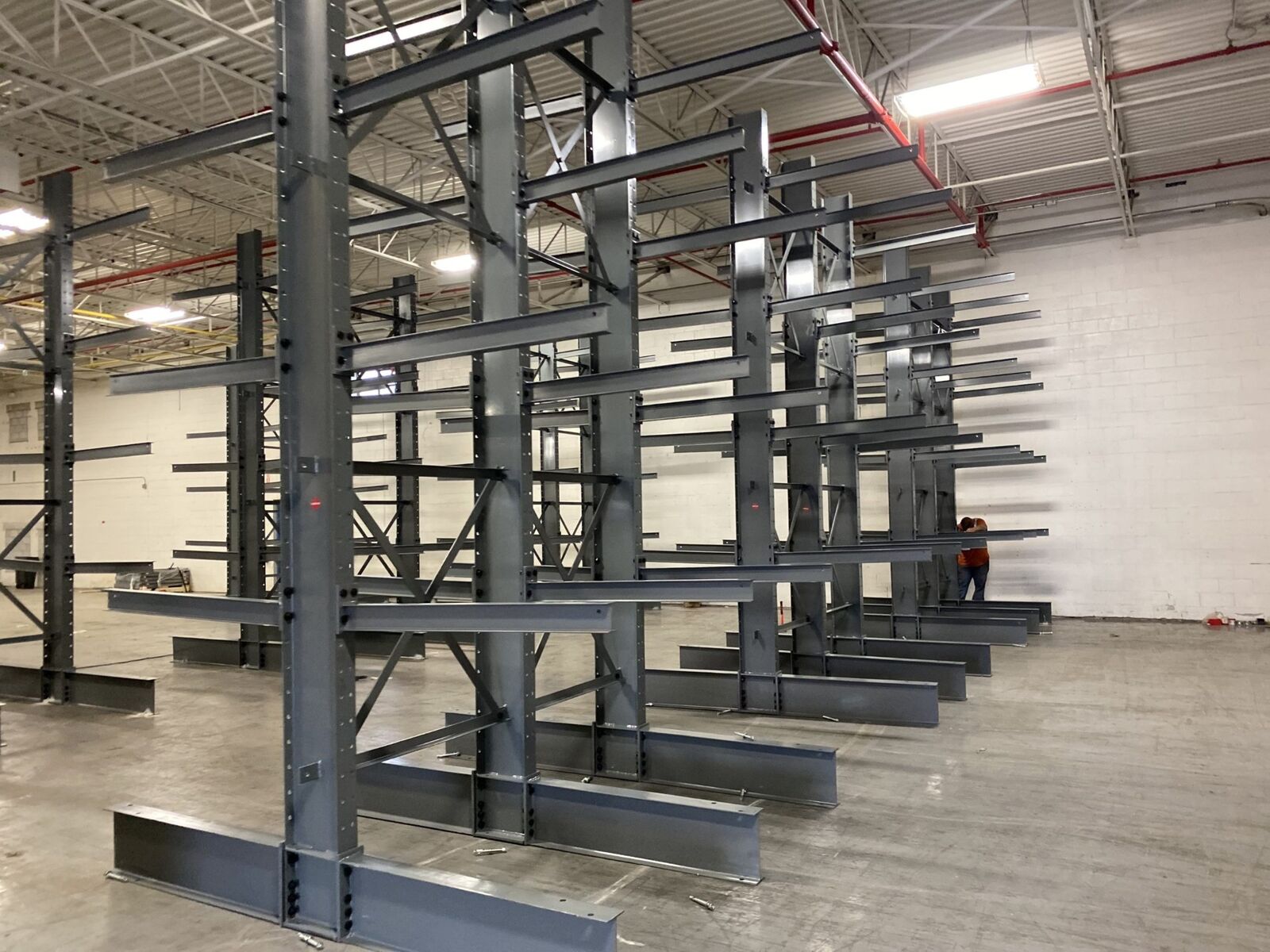
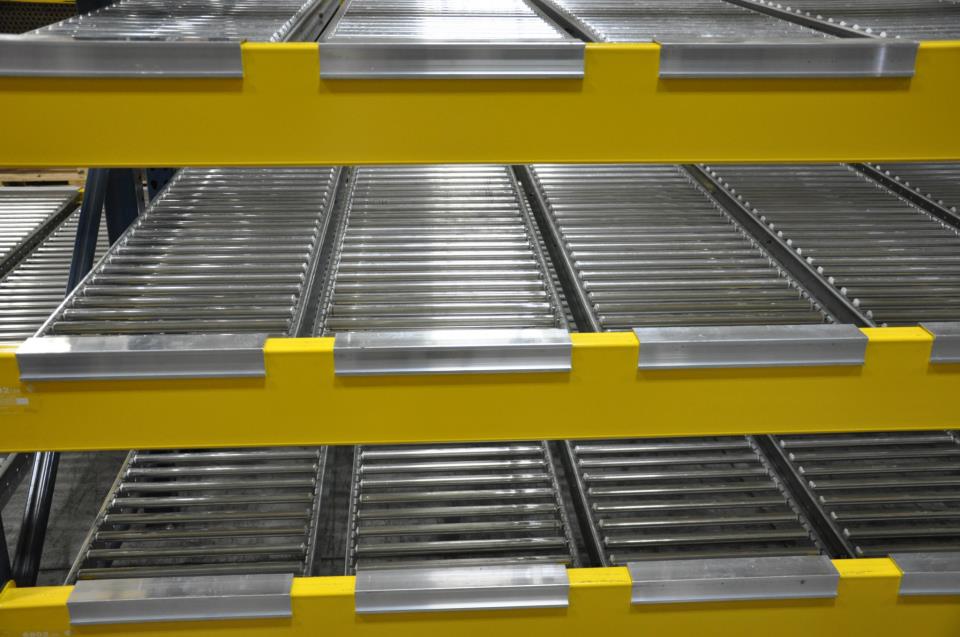
Pallet flow rack: Share your receiving and shipping picture
Send pallet dimensions, weight ranges, active lot counts and photographs of the pallet underside.
Philadelphia Pallet Rack
7201 Frankford Ave.
Unit #3151
Philadelphia, PA 19135
(215) 445-1559Monday - Friday: 8:00 AM - 6:00 PM
Philadelphia buyer questions on gravity flow rack
Other Rack Types We Supply in Philadelphia
Pallet Rack
Every pallet reachable, every time. The baseline we size everything else against.
View detailsPushback Rack
Two to six pallets deep from one aisle, without giving up much reach.
View detailsDrive-In Rack
Fewer access aisles. Forklifts enter storage lanes built for bulk pallets of the same item.
View detailsCantilever Rack
Arms with nothing in front of them, built for lumber, pipe, and anything a pallet can't hold.
View detailsCarton Flow Rack
Cases advance to the picker instead of the picker hunting for cases.
View detailsWarehouse Relocation
Teardown, label, coordinate transport and reinstall your storage systems around a planned building move.
View detailsNearby Areas We Also Serve
Philadelphia urban access conditions make a separate building review important when coordinating storage with surrounding distribution locations.
Where We Work
Located in Philadelphia, we serve the entire Greater Philadelphia region with industrial pallet racks and warehouse storage solutions.
Philadelphia Pallet Rack
Address
7201 Frankford Ave.
Unit #3151
Philadelphia, PA 19135
Phone
(215) 445-1559Business Hours
Monday - Friday: 8:00 AM - 6:00 PM
Saturday: Closed
Sunday: Closed
Need Pallet Flow Rack in Philadelphia?
Request a lane review for philadelphia date-controlled freight: (215) 445-1559.