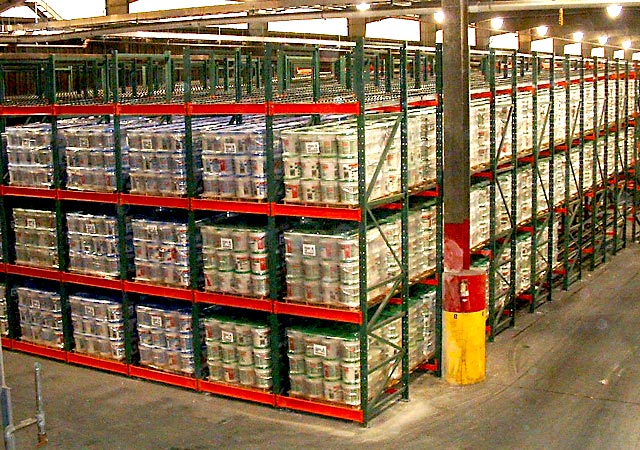
Pallet Flow Rack in Norristown
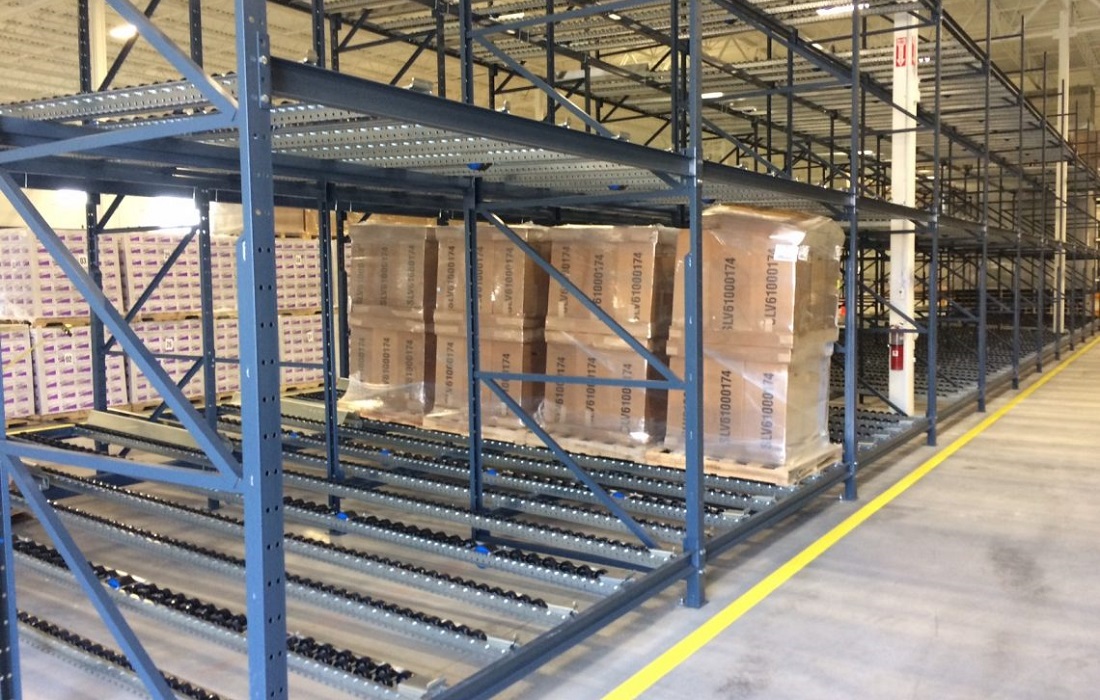
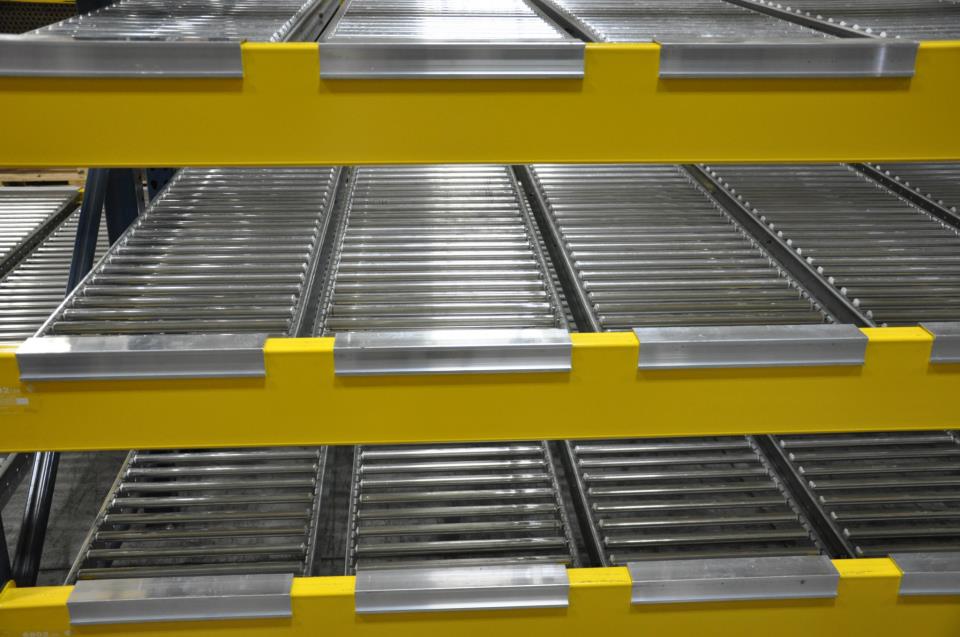
Pallet flow rack in Norristown gives dated stock a defined outbound face instead of leaving older pallets hidden behind recent receipts. Sloped roller lanes accept replenishment at one end and present pallets for retrieval at the other. Gravity advances the queue after each removal, while brakes or speed controllers regulate travel for the selected loads.
Older industrial footprints make that two-sided arrangement a design decision, not an automatic fit. For trade distribution and light manufacturing, the strongest candidates are dated, high-volume SKUs held in repeated pallet quantities. Pallet flow racking should be allocated to those products while mixed regional parts remain accessible in a separate zone.
How Gravity Flow Rack Geometry Supports Stock Rotation
Measure the recurring lots
Count pallets normally held per active SKU and identify which dates need separate access. Deep storage works best when repeat quantities occupy it consistently. Avoid assigning an entire long lane to an item usually received in small, irregular batches.
Check contact and stability
Review underside boards, runners, load overhang, and wrapping on sample pallets. The roller arrangement needs consistent bearing surfaces. Damaged or distorted bases can interfere with travel, so pallet-condition standards belong in the operating plan from the outset.
Set the travel arrangement
Match lane slope, length, rollers, and speed controllers to minimum and maximum loads. Too little movement leaves gaps or stalls; uncontrolled descent creates an unacceptable arrival at the pick face. Representative loaded checks help establish the intended operating range.
Prepare the working lanes
Locate replenishment opposite retrieval and allow forklift withdrawal room at both ends. During installation, confirm rack positioning and track alignment against the drawing. Establish lane identification, loading order, and a procedure for isolating a lane that does not feed normally.
Norristown Pallet Flow Racking From Layout to Installation
Review Norristown warehouse layouts to place this system within your warehouse plan, and pallet flow storage approach to examine the storage method itself. We define the flow area using pallet data and building measurements, showing working aisles as well as stored loads so the drawing represents the complete footprint.
In a constrained Norristown building, our installation planning uses experienced installation crews we schedule and manage, with assembly areas and component access considered before work begins. The scope addresses supporting rack, roller components, lane geometry, and representative load checks rather than assuming static rack setup covers a moving-pallet system.
Where two-sided access consumes too much floor, compare pushback reserve configurations for repeat reserve that tolerates last-in, first-out retrieval. Keep smaller regional parts orders in a dedicated carton picking alternatives area when case presentation matters more than full-pallet movement. A combined layout can preserve access without forcing every SKU into gravity lanes.
Why a Norristown Pallet Flow Rack Starts With Access
A long lane is not useful if a column prevents the forklift from approaching its loading position. We look at both faces, turning space, and changing overhead heights before proposing storage depth. This keeps the design focused on positions that can be replenished and retrieved under ordinary operating conditions.
Your Norristown proposal comes from a division of Warehouse Equipment & Supplies Co., supplying and installing since 1997. Our review follows the inventory as well as the floor plan: lot sizes, weight extremes, and pallet bases all affect lane selection.
Ridge Pike Distribution Within Older Industrial Footprints
Trade suppliers near Ridge Pike and the US 202 corridor can carry repeated dated products alongside a much wider parts catalog. In older industrial conversions around the Schuylkill River corridor, columns and mixed ceiling heights can interrupt otherwise straight rack rows. We use those constraints to place lane groups and loading routes rather than assuming every bay can share the same depth or elevation.
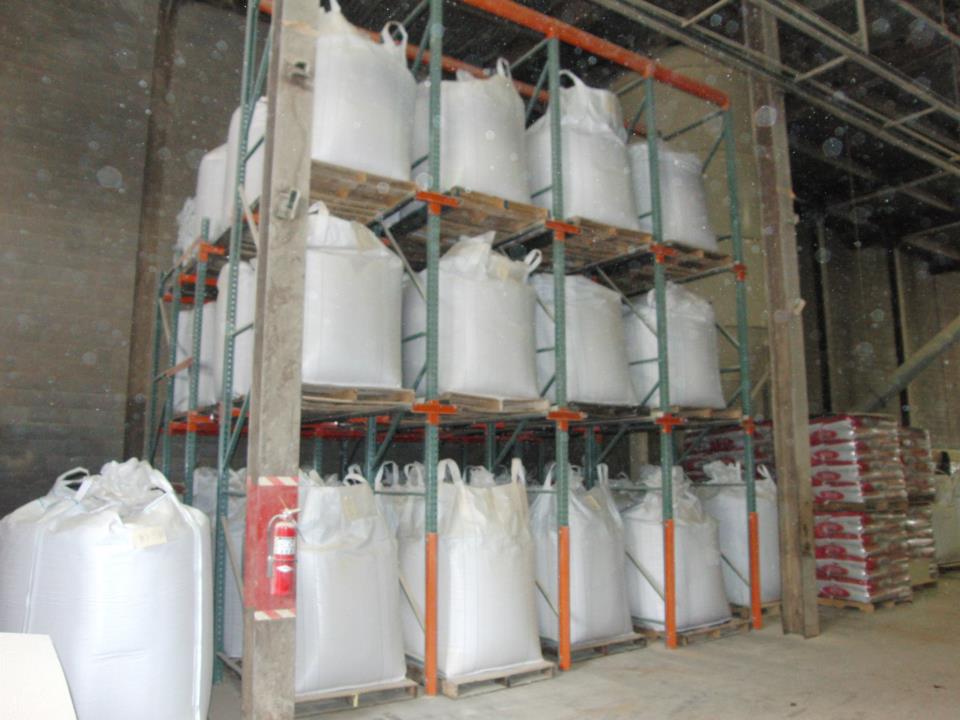
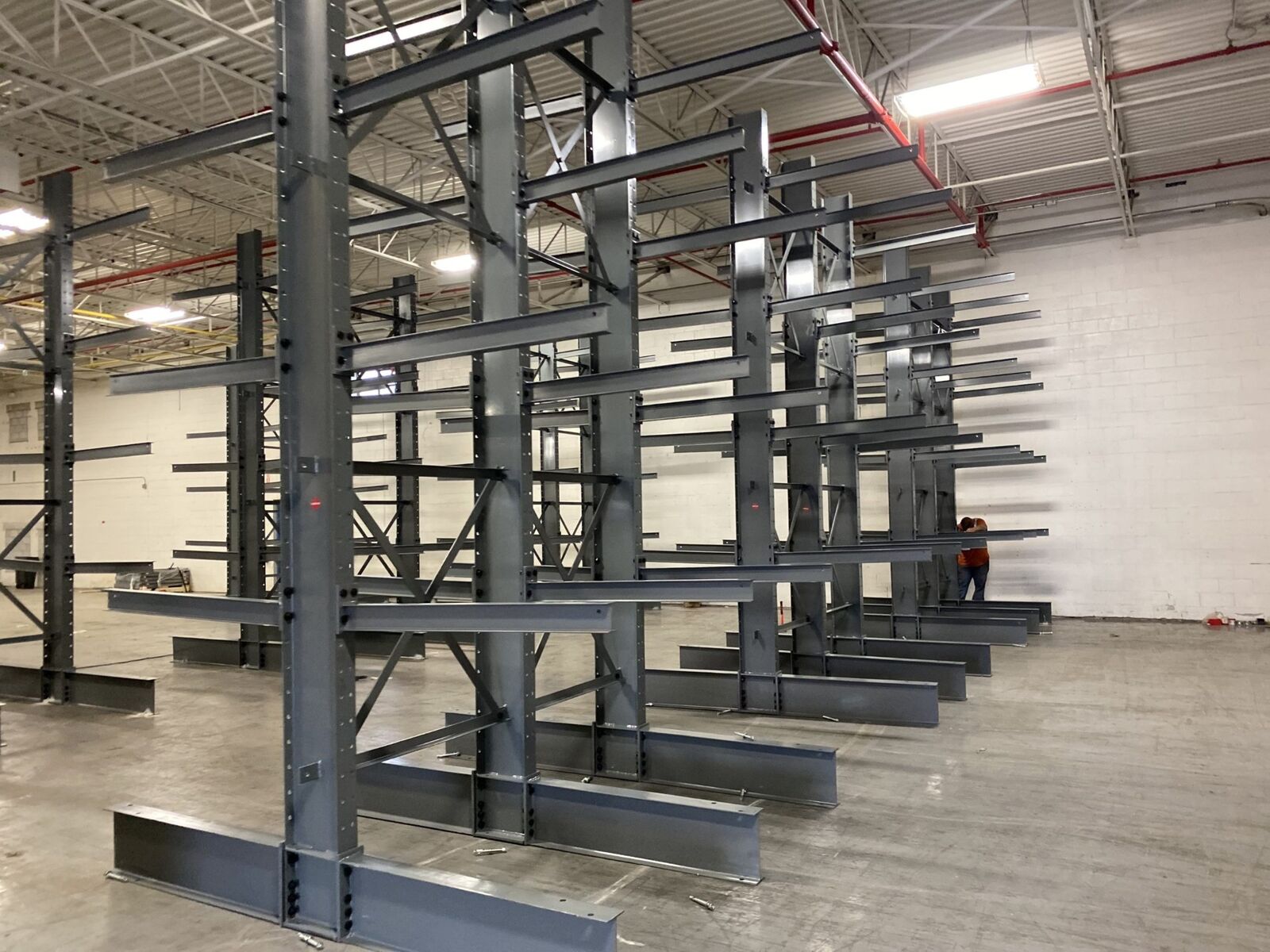
Warehouse Racking Examples
Give Us the Constraints Behind Your Norristown Layout
Mark columns, doors and lowest obstructions on a sketch. Provide pallet specifications and forklift details at (215) 445-1559, identifying where inbound and outbound loads wait.
Philadelphia Pallet Rack
7201 Frankford Ave.
Unit #3151
Philadelphia, PA 19135
(215) 445-1559Monday - Friday: 8:00 AM - 6:00 PM
Norristown Lane-Layout Questions
Other Rack Types We Supply in Norristown
Pallet Rack
Every pallet reachable, every time. The baseline we size everything else against.
View detailsPushback Rack
Two to six pallets deep from one aisle, without giving up much reach.
View detailsDrive-In Rack
Fewer access aisles. Forklifts enter storage lanes built for bulk pallets of the same item.
View detailsCantilever Rack
Arms with nothing in front of them, built for lumber, pipe, and anything a pallet can't hold.
View detailsCarton Flow Rack
Cases advance to the picker instead of the picker hunting for cases.
View detailsWarehouse Relocation
Teardown, label, coordinate transport and reinstall your storage systems around a planned building move.
View detailsNearby Areas We Also Serve
Norristown column constraints should not be carried into another facility drawing without checking that building separately.
Where We Work
Located in Philadelphia, we serve the entire Greater Philadelphia region with industrial pallet racks and warehouse storage solutions.
Philadelphia Pallet Rack
Address
7201 Frankford Ave.
Unit #3151
Philadelphia, PA 19135
Phone
(215) 445-1559Business Hours
Monday - Friday: 8:00 AM - 6:00 PM
Saturday: Closed
Sunday: Closed
Need Pallet Flow Rack in Norristown?
Request a lane review for norristown industrial conversion layouts: (215) 445-1559.