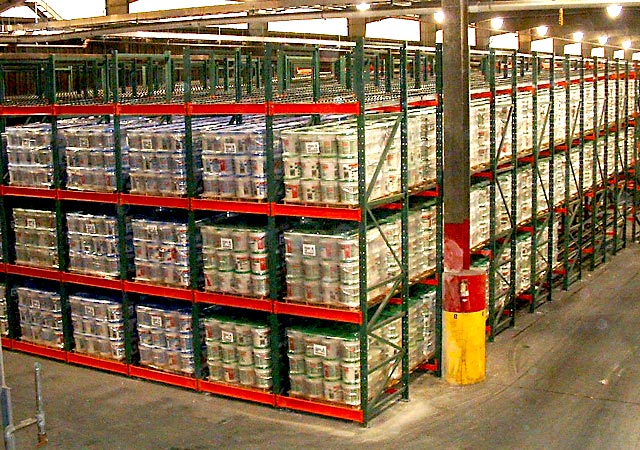
Pallet Flow Rack in Chester
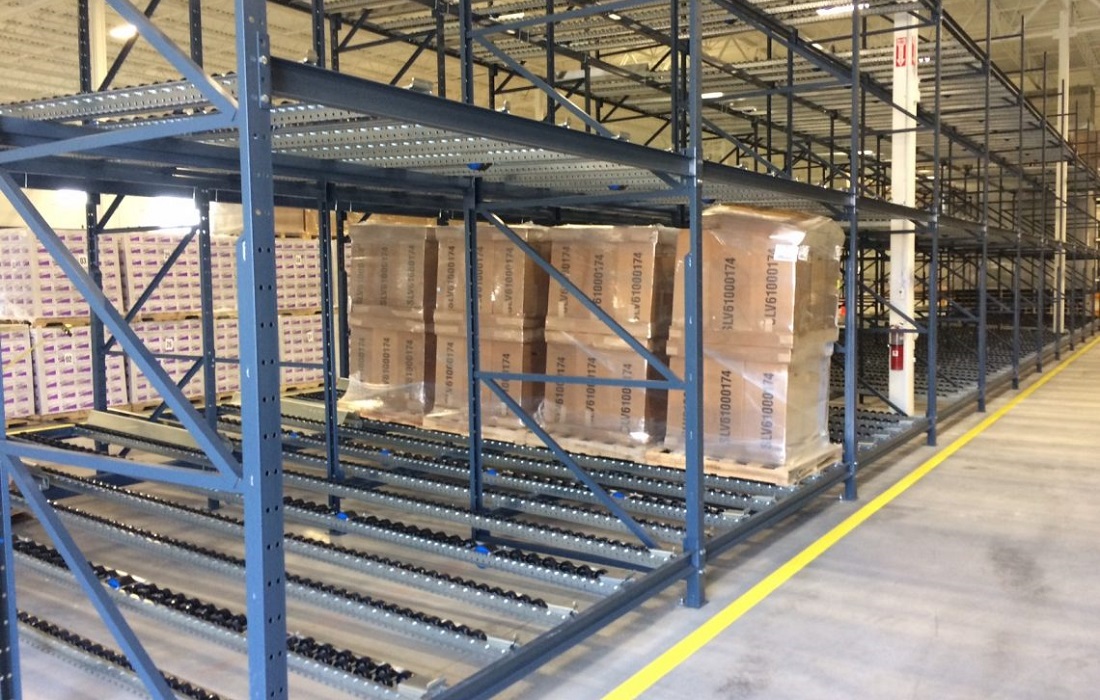
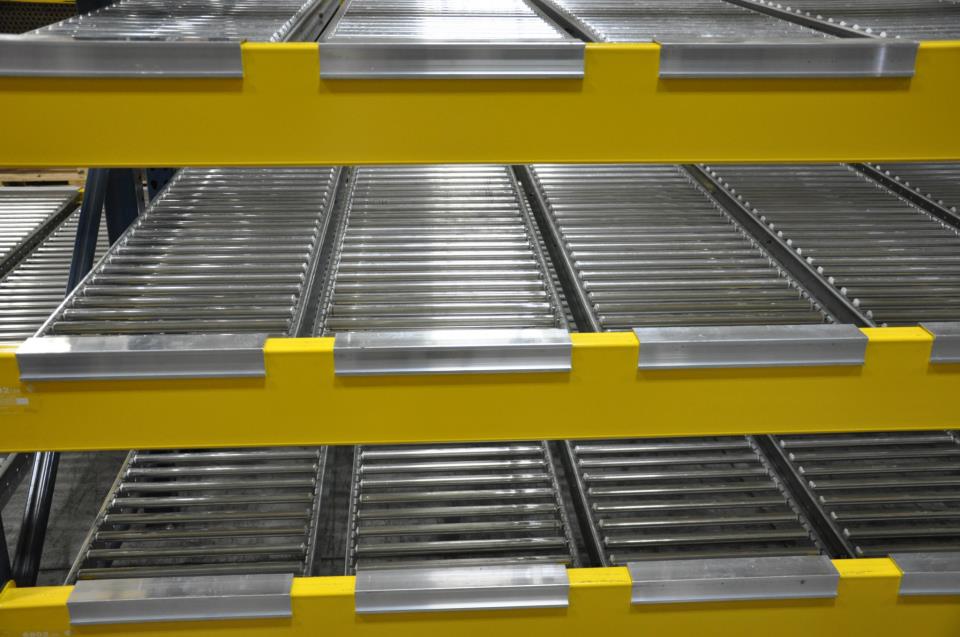
Pallet flow rack in Chester can turn dated finished-goods storage into a forward-moving sequence instead of a search through blocked pallets. Production replenishes the loading end, while shipping removes stock from the opposite face, allowing gravity rollers to present the next pallet without a forklift entering the lane.
For a manufacturer, the key question is whether output arrives in repeatable pallet groups that shipping can consume in order. A high-volume SKU with regular withdrawals may support deep storage; uneven demand or many small lots can leave dedicated lanes partly empty. We build the discussion around those differences before assigning positions.
How pallet flow rack supports finished-goods release
The design links four decisions: which pallets enter, how far they travel, what controls their speed and how operators preserve the intended sequence.
Document load variation
Measure footprint, height and weight, then inspect bottom boards and runners. Note overhanging packaging and any pallet types arriving from outside suppliers. Establish an acceptance procedure so damaged or incompatible bases do not enter a lane designed for a different contact pattern.
Allocate lanes by demand
Use actual batch size and withdrawal frequency to select lane length. Keep enough lanes for active SKUs and date groups rather than pursuing maximum depth everywhere. The slope must match the roller system and load behavior, with room for forklift placement at each end.
Specify restrained travel
Use brakes or speed controllers suited to the expected weights to govern forward movement. Review discharge stops and pallet separation needs at the picking face. The goal is controlled presentation after withdrawal, not an uncontrolled run toward the aisle.
Check the complete cycle
Run sample loads from replenishment through discharge after assembly. Observe tracking, restart behavior and removal clearance with the intended handling equipment. Confirm lane labels and FIFO checks, including the procedure for isolating an unsuitable pallet before it joins stored production.
Pallet flow rack service for Chester facilities
Our Chester facility layouts discussion addresses the building and material routes; full-pallet flow planning narrows the review to roller lanes and full-pallet rotation. Share production release patterns alongside the floor plan so capacity calculations account for the space needed to receive and dispatch goods.
If your reserve inventory does not require date order, compare pushback lane comparison against the two-aisle arrangement. Where industrial orders involve case picking, case-flow arrangements offers a separate way to present smaller units without treating the full pallet lane as a hand-picking shelf.
Assembly is carried out by experienced installation crews we schedule and manage, with work areas and component staging agreed around the plant's material routes. The installation review covers frame alignment, roller placement and lane performance, followed by configuration-specific load information and an operating handoff for replenishment and withdrawal.
Why pallet flow racking starts with the load
Heavy finished goods need more than a nominal pallet size on a drawing. Runner placement, underside contact and load distribution affect roller support and travel. We review the complete weight range and pallet construction so a light batch is not overlooked while the heaviest load drives the capacity discussion.
Our business is a division of Warehouse Equipment & Supplies Co. and has supplied and installed warehouse equipment since 1997. That background informs a practical comparison: gain storage depth only where FIFO demand, pallet consistency and accessible loading and picking faces justify dedicating floor space to flow lanes.
Riverfront production to the highway network
In a Delaware River waterfront manufacturing building, fixed machinery and older column grids can determine where a replenishment aisle belongs. Finished-goods dispatch toward I-95 needs a clear withdrawal face, not a pick aisle doubling as trailer staging. For industrial distribution using US 322 and the Commodore Barry Bridge, the layout should also leave room to assemble outbound loads without interrupting rear replenishment.
Warehouse Racking Examples
Pallet flow rack: Request a finished-goods lane review
Bring the heaviest and lightest loads into the same conversation.
Philadelphia Pallet Rack
7201 Frankford Ave.
Unit #3151
Philadelphia, PA 19135
(215) 445-1559Monday - Friday: 8:00 AM - 6:00 PM
Chester questions on gravity flow rack selection
Other Rack Types We Supply in Chester
Pallet Rack
Every pallet reachable, every time. The baseline we size everything else against.
View detailsPushback Rack
Two to six pallets deep from one aisle, without giving up much reach.
View detailsDrive-In Rack
Fewer access aisles. Forklifts enter storage lanes built for bulk pallets of the same item.
View detailsCantilever Rack
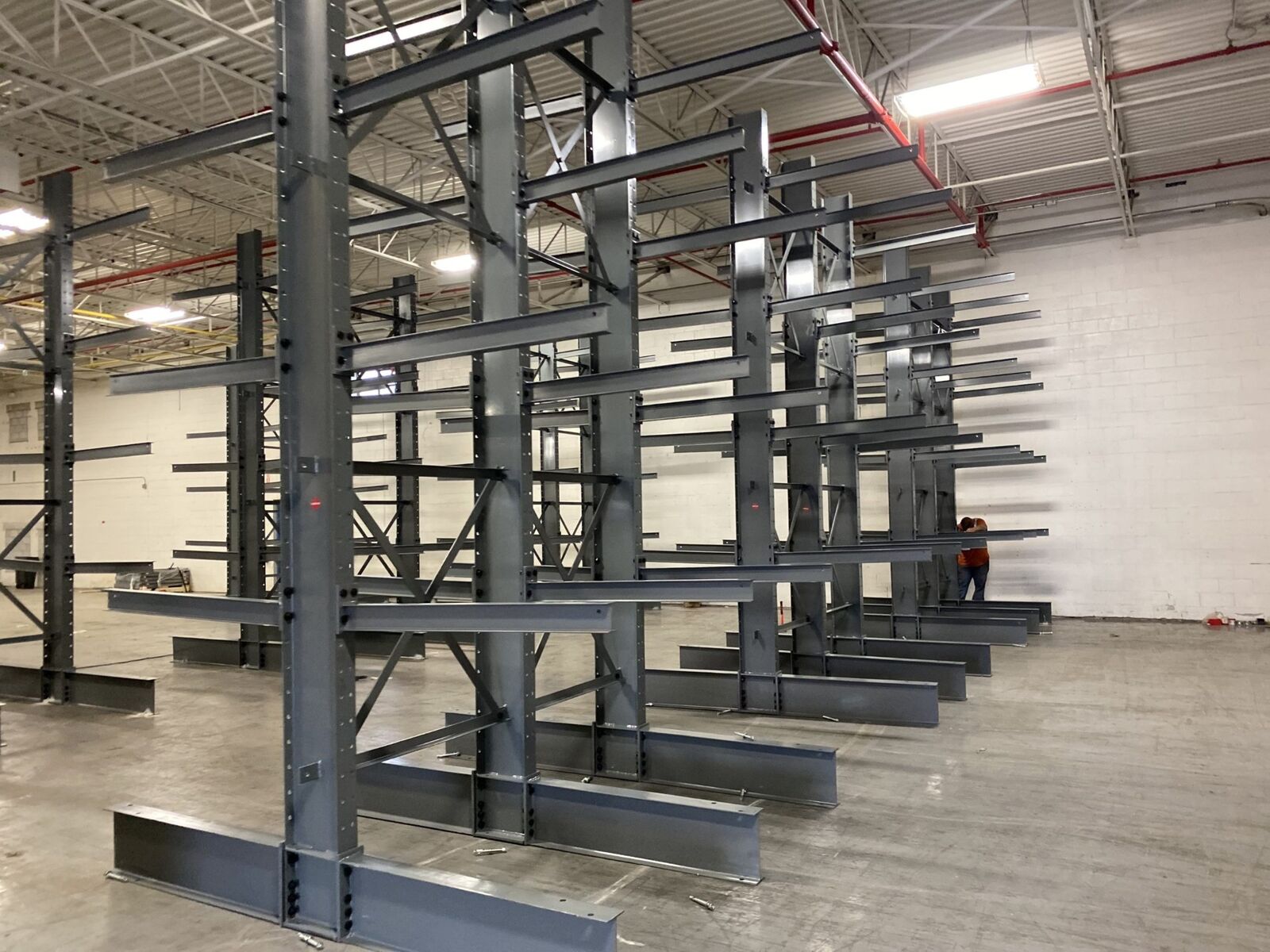
Arms with nothing in front of them, built for lumber, pipe, and anything a pallet can't hold.
View detailsCarton Flow Rack
Cases advance to the picker instead of the picker hunting for cases.
View detailsWarehouse Relocation
Teardown, label, coordinate transport and reinstall your storage systems around a planned building move.
View detailsNearby Areas We Also Serve
Chester finished-goods movement sets the design priorities, distinct from the inventory mix of other regional buildings.
Where We Work
Located in Philadelphia, we serve the entire Greater Philadelphia region with industrial pallet racks and warehouse storage solutions.
Philadelphia Pallet Rack
Address
7201 Frankford Ave.
Unit #3151
Philadelphia, PA 19135
Phone
(215) 445-1559Business Hours
Monday - Friday: 8:00 AM - 6:00 PM
Saturday: Closed
Sunday: Closed
Need Pallet Flow Rack in Chester?
Request a lane review for chester production and highway dispatch: (215) 445-1559.