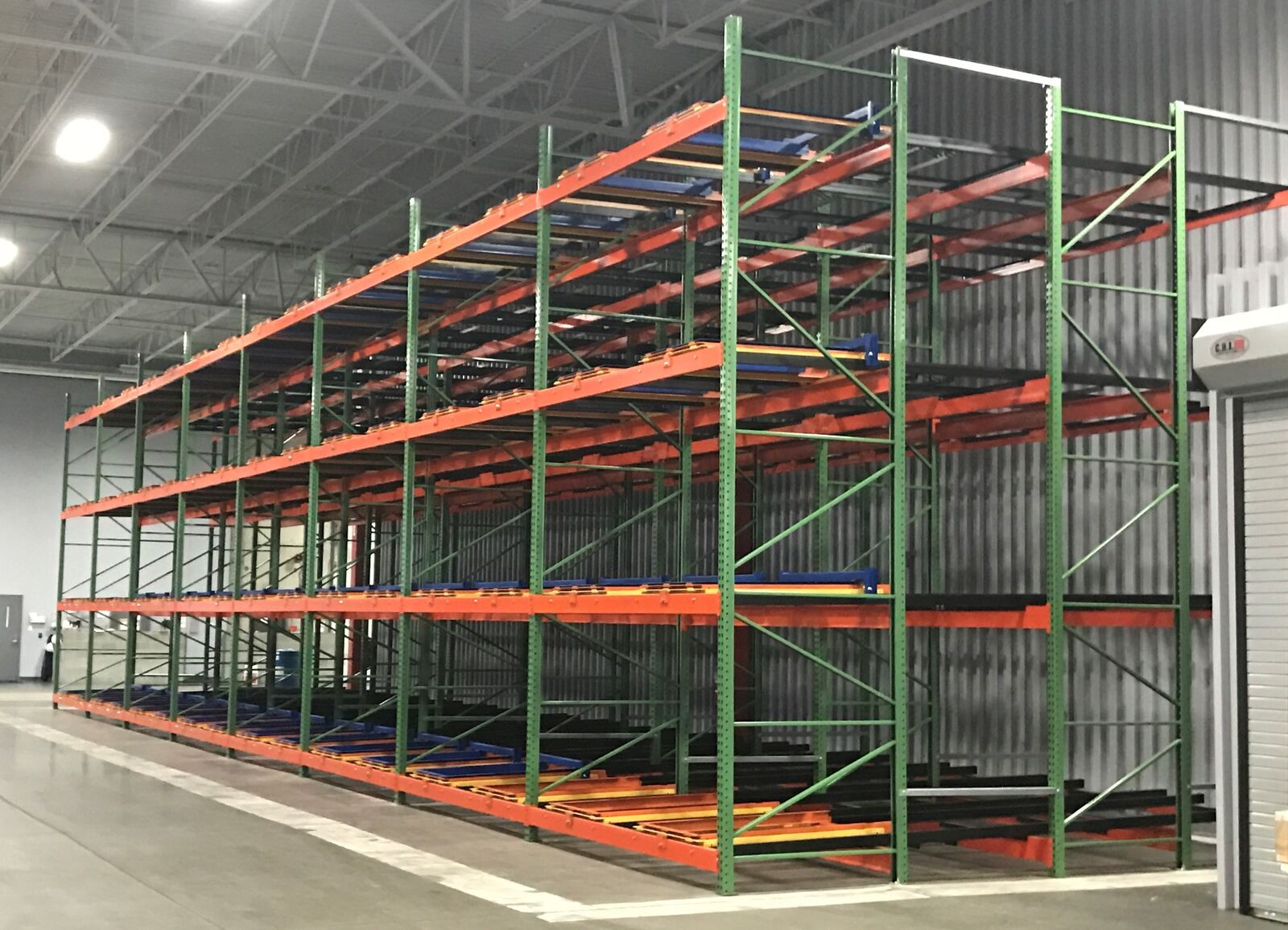
Pushback Rack in Wilmington
Pushback rack in Wilmington creates deeper reserve storage for matching pallet loads while keeping handling at the front aisle. Food distribution connected to the Port of Wilmington needs a clear lot policy before adopting that arrangement, especially when cold-storage inventory has different release dates within the same SKU.
I-95, I-495 and US 13 link Wilmington with New Castle distribution areas, where inbound freight may arrive in substantial groups. Base lane depths on the quantities normally held after those groups are broken down. Older, low-clearance rooms can constrain both stack height and the approach needed to handle loaded pallets.
Pushback pallet rack installation for separated reserve zones
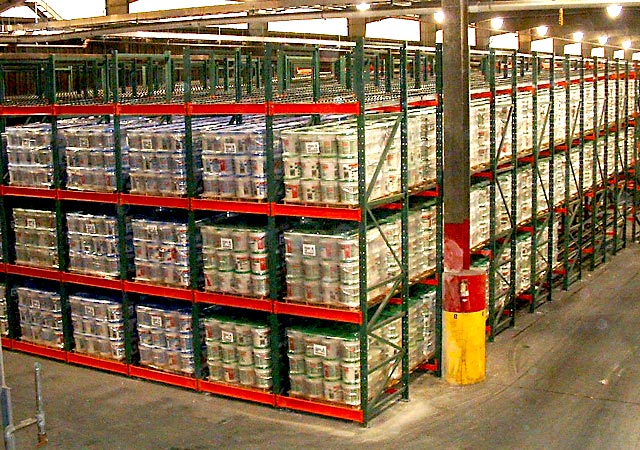
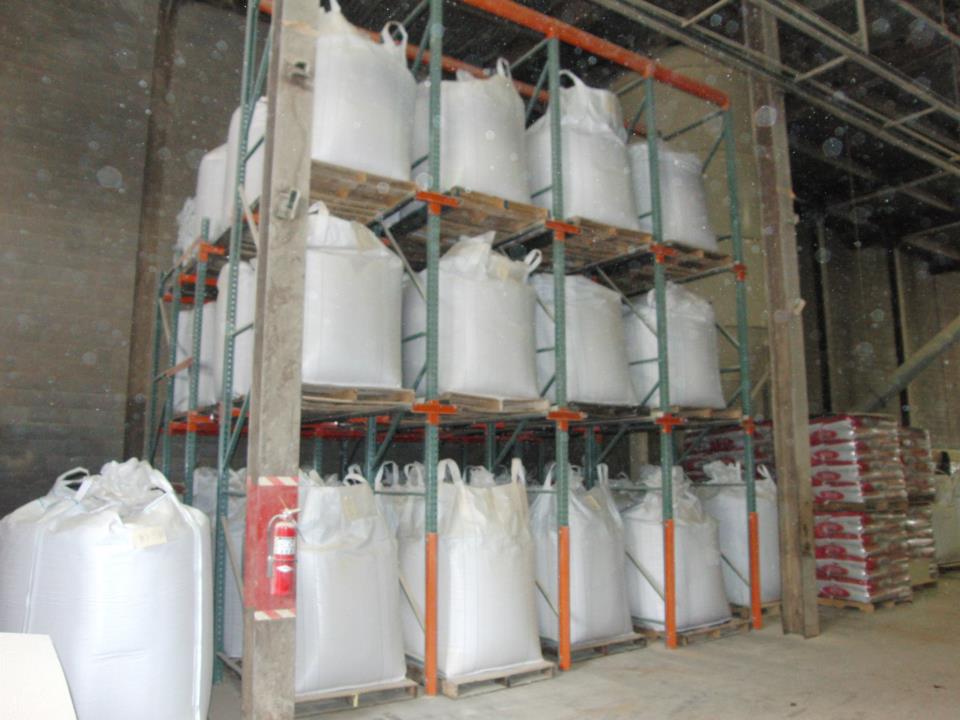
A pushback rack proposal compares reserve capacity with the required release access. Selective rack offers direct access to each pallet, useful for independently selected lots. Drive-in rack uses truck entry with the truck traveling on the floor, not the pallet-support rails, and should be compared as a different handling method.
For an agreed Wilmington assembly area, experienced installation crews we schedule and manage coordinate the row sequence with the site contact before stock is relocated. Define material staging, operating boundaries and the room conditions relevant to the supplied components. Provide configuration-specific capacity information at handoff rather than leaving operators with an unqualified position count.
Use Wilmington storage options to review local storage choices and pushback rack systems to examine this system in more detail. Consider Wilmington pallet flow rack when first-in release governs, and compare Wilmington drive-in rack where large uniform groups allow truck-entry storage. The selected method should follow the food or distribution workflow, not just the available room depth.
Why pushback rack requires a cold-stock release rule
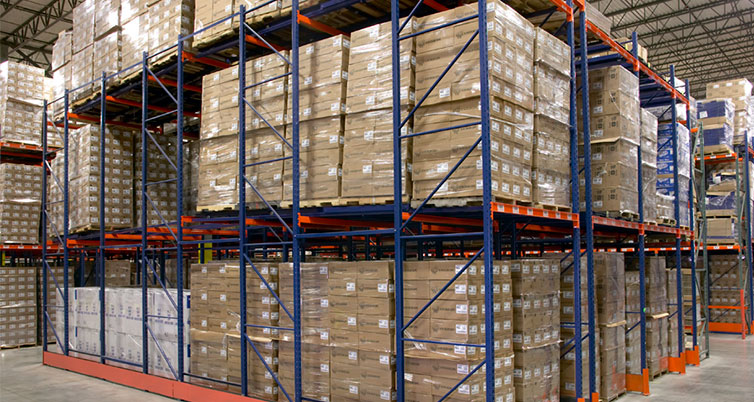
A food reserve may contain many pallets yet still require several separate faces for lots or dates. Compare ordinary pallets per SKU and release group, rather than sizing from total receipts. Fewer aisles can increase storage density, but buried stock that cannot be released in the required order is not a practical gain.
Philadelphia Pallet Rack, the division of Warehouse Equipment & Supplies Co. supplying and installing since 1997, prepares storage scopes around the recorded load and handling conditions. Our proposals cover new material only and identify operating-temperature requirements for review with the selected system instead of assuming every configuration suits a cold room.
Port receipts need a plan beyond unloading
Port-linked food loads may require separate reserve groups before regional dispatch. In New Castle distribution space, keeping receiving staging outside the deep rows helps distinguish incoming batches from released stock. Low overhead areas in older Wilmington buildings should be shown individually on the layout.
How push back racking returns loads to the front
Evaluate the lane mechanism alongside the product release sequence and room conditions.
Establish the supported reserve depth
Available configurations may hold two to six pallets deep, with depth system-dependent. Compare those options with ordinary SKU quantities and lot separation needs, then review pallet construction, dimensions and loaded heights for the proposed cart arrangement.
Push earlier loads rearward
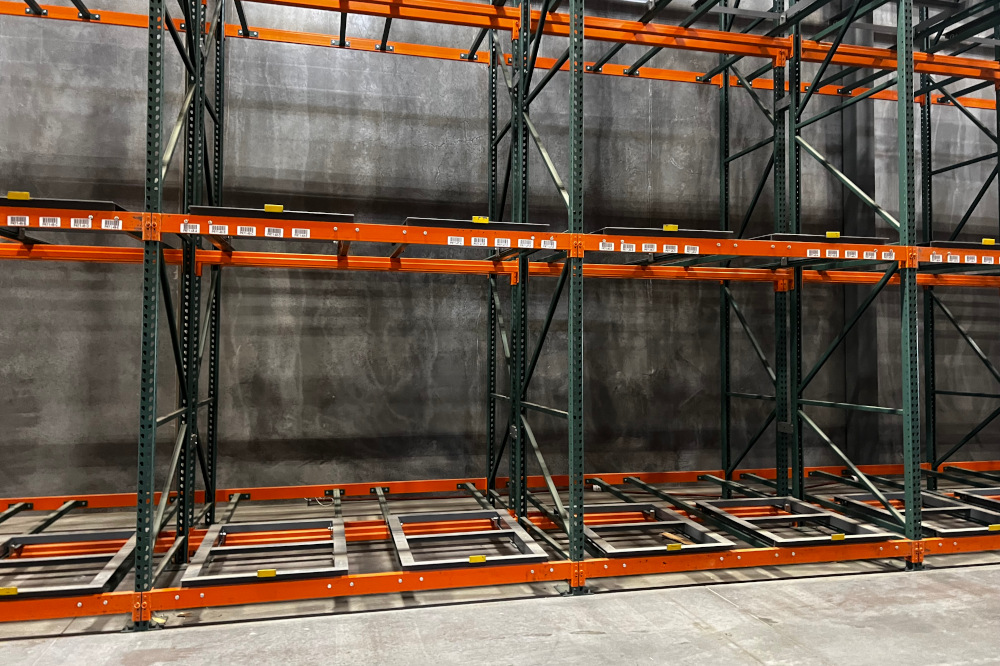
The system carries pallets on nested carts on inclined rails. During loading, an incoming pallet pushes earlier pallets rearward. Operators place the new load from the aisle, avoiding travel into the lane for each storage position.
Control the unloading movement
With controlled forklift withdrawal of the front pallet, gravity lets the remaining pallets move forward toward the face. This is LIFO, explicitly last in, first out, so the newest loaded pallet is presented before earlier stock in that lane.
Verify support and rack capacity
Size beams and frames using actual load weights, spans and rack height. Existing-rack compatibility needs a specific review of connections and support details; do not assume that a cart-and-rail system will bolt into an existing rack as a ready-made addition.
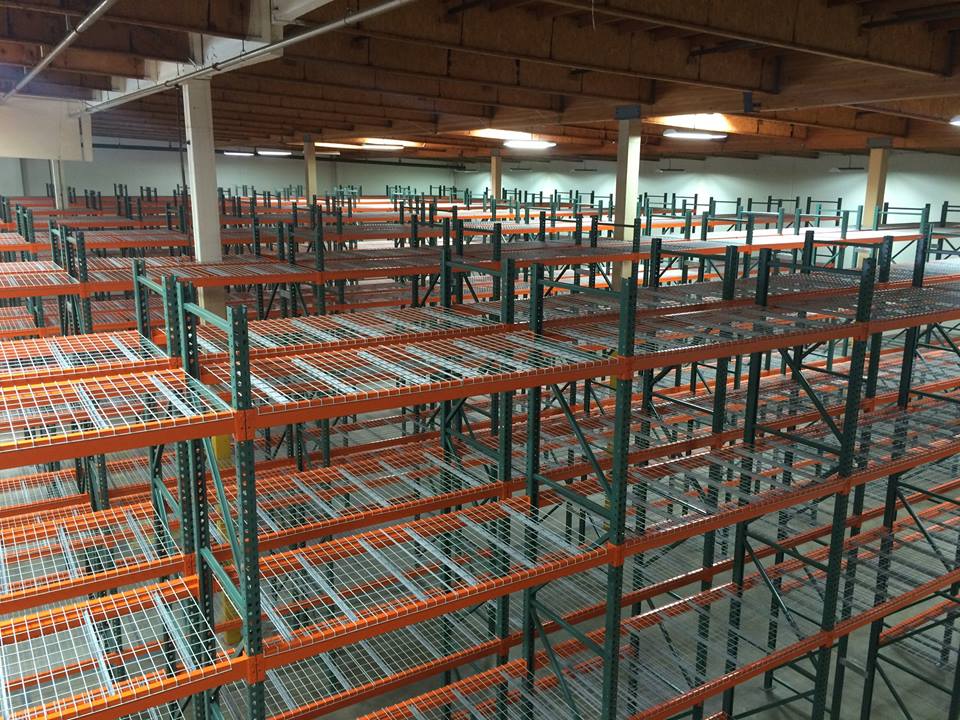
Warehouse Racking Examples
Define a Wilmington reserve-storage scope
Provide pallet measurements, loaded weights, typical quantities by release group and operating temperatures. Add forklift specifications and a room drawing showing low-clearance sections, columns and receiving staging.
Philadelphia Pallet Rack
7201 Frankford Ave.
Unit #3151
Philadelphia, PA 19135
(215) 445-1559Monday - Friday: 8:00 AM - 6:00 PM
Wilmington pushback rack planning answers
Other Rack Types We Supply in Wilmington
Pallet Rack
Every pallet reachable, every time. The baseline we size everything else against.
View detailsPallet Flow Rack
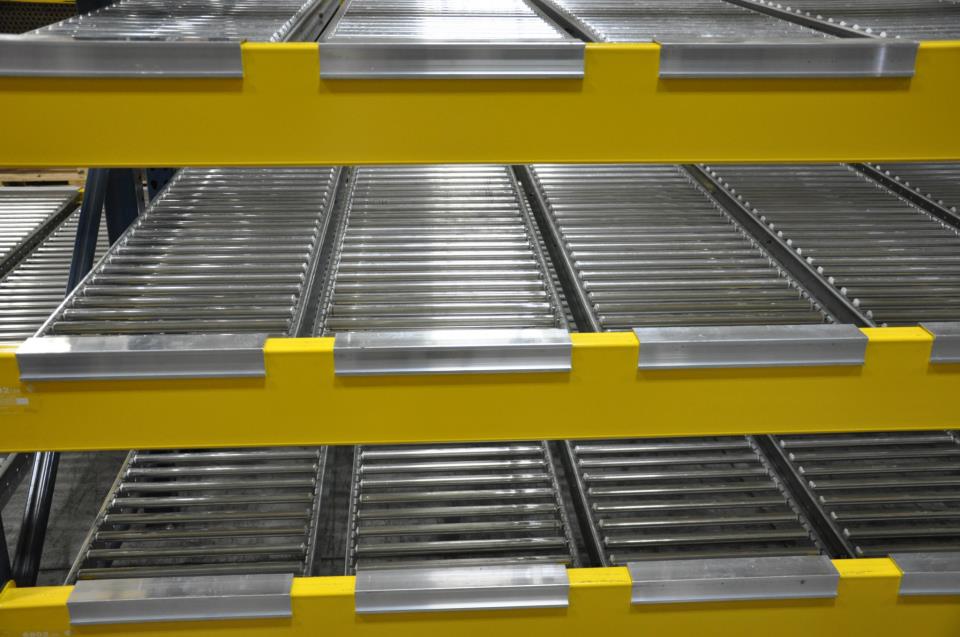
Load one side, pick the other, and let gravity enforce first in, first out.
View detailsDrive-In Rack
Fewer access aisles. Forklifts enter storage lanes built for bulk pallets of the same item.
View detailsCantilever Rack
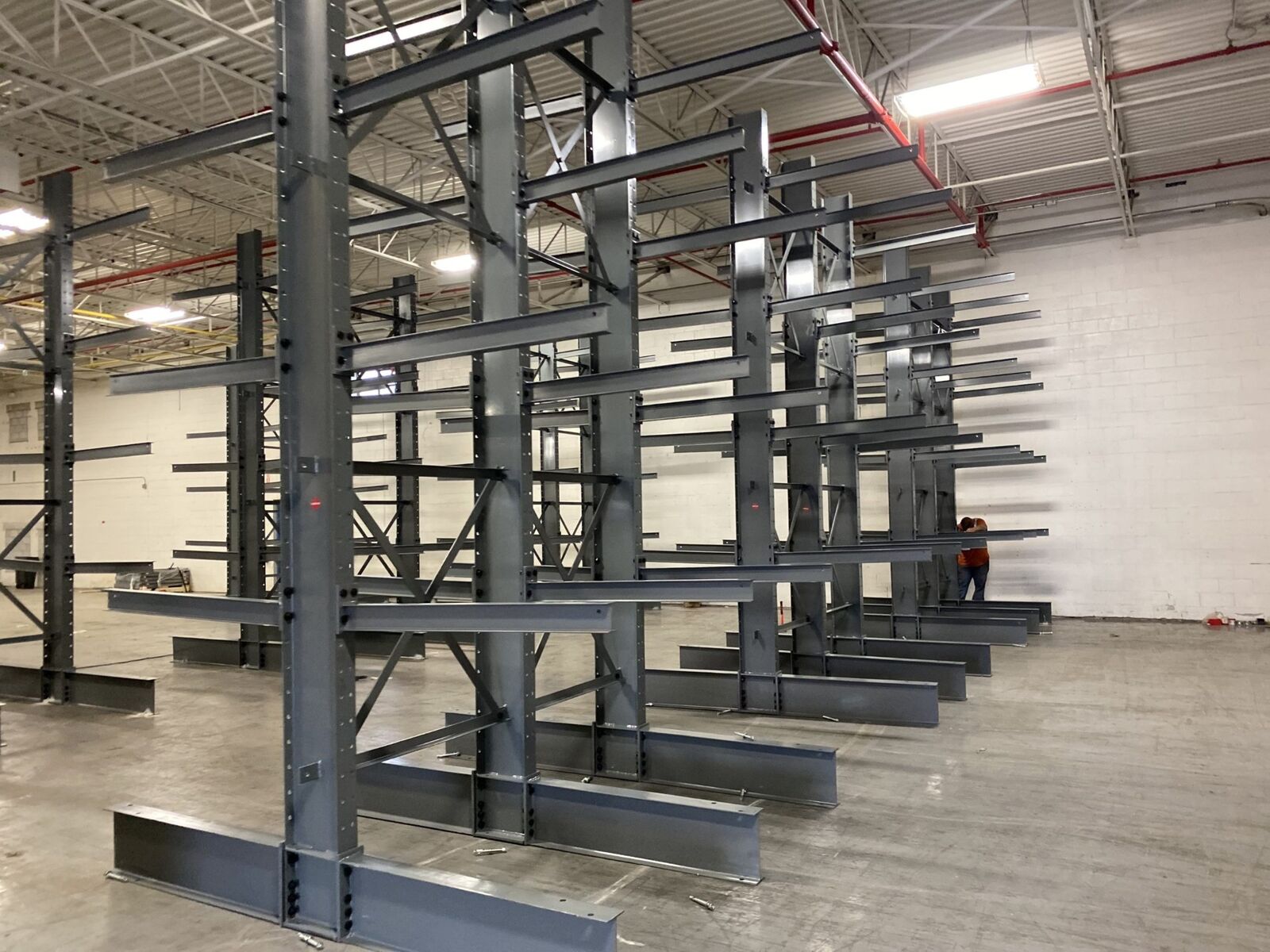
Arms with nothing in front of them, built for lumber, pipe, and anything a pallet can't hold.
View detailsCarton Flow Rack
Cases advance to the picker instead of the picker hunting for cases.
View detailsWarehouse Relocation
Teardown, label, coordinate transport and reinstall your storage systems around a planned building move.
View detailsNearby Areas We Also Serve
Wilmington and nearby distribution projects begin with the receiving room, stock-release rules and the movements between reserve lanes and dispatch.
Where We Work
Located in Philadelphia, we serve the entire Greater Philadelphia region with industrial pallet racks and warehouse storage solutions.
Philadelphia Pallet Rack
Address
7201 Frankford Ave.
Unit #3151
Philadelphia, PA 19135
Phone
(215) 445-1559Business Hours
Monday - Friday: 8:00 AM - 6:00 PM
Saturday: Closed
Sunday: Closed
Need Pushback Rack in Wilmington?
Request a storage comparison that accounts for both release order and occupied positions.